
Dr Philip Beeley
Voices from the Schoolroom: Mathematics education in England, 1650–1750
A new AHRC research project (2026–2029)
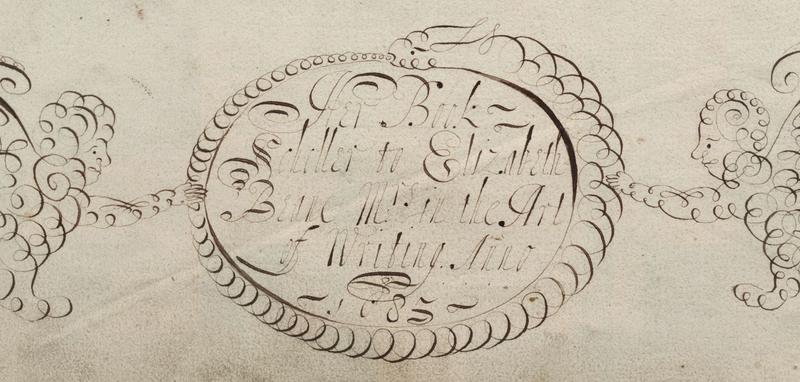
Benjamin Wardhaugh discusses his new AHRC-funded research project, which focusses on mathematics education in early modern England. Manuscript schoolbooks, administrative records and personal letters offer new insights into the social and intellectual processes that embedded mathematics into early modern education and public life. The project seeks to understand what led to this transformation of the role of mathematics in early modern England. Who were the key figures that promoted this mathematical turn in English intellectual culture? How did institutions such as the universities and the Royal Society respond?
A period of change
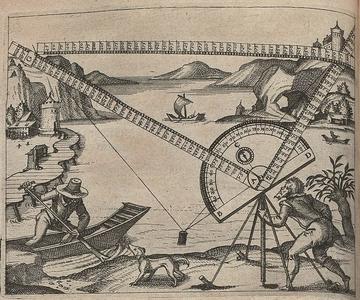
The period from the mid-17th century to the mid-18th saw a transformation in the status and the visibility of mathematics in European economic and intellectual culture. For various reasons, England was slower than most nations to react, but by the end of the period plans were afoot to fundamentally revise university teaching of mathematics and new opportunities were appearing in fields such as merchant adventuring for numerically astute individuals. Plans to establish new academies, again with a strong focus on mathematics also emerged. By the end of the period far more institutions promoted and funded mathematical learning and teaching, far more schools and teachers offered instruction in mathematical disciplines, and far more individuals sought that instruction either formally or informally. Both the social and the geographical range of mathematical learning increased dramatically.
These changes occurred against a background of rapid change in mathematics itself: the increasing sophistication of algebra and its notation, the invention of the calculus and the development of methods for studying statistical and probabilistic processes. They also coincided with other changes in early modern cultures of knowledge. Scientific societies and their publications gave ever-increasing prominence to mathematics and to its relationship with empirical and mechanical modes of enquiry. The rise of such tools as ‘physico-mathematics’ or the ‘mathematical model’ led many thinkers to grant mathematics an increased status in relation to other sources of knowledge.
Our project aims to shed light on the changing status of mathematics in this period, and its changing social and cultural location. It will focus on English mathematical teaching as a case study, and it will look at changes across the period in the mathematical learning of individuals, the provision of mathematical instruction by schools, teachers, and other sites, and the promotion of mathematical education by instutions.
Resources
A wealth of archival resources are now available bearing on these questions, notably in local record offices as well as held by universities and learned instutions. In a preliminary search, we have identified around five hundred relevant documents in English archives, ranging from the financial records of schools and their curricula to the manuscript exercise books of individual students. Other sources include dense marginal annotations made in printed textbooks by teachers and students, personal diaries of those who taught or learned mathematics, and the advertisements of schools and teachers looking to attract mathematical students. Much of this material has only become available through digitization and cataloguing within the last two decades.
This evidence will enable us to build up a rich picture of mathematical instruction in a range of different locations, from the individual’s study through artisan workshops, charity schools, grammar schools, dissenting academies and universities. It will enable us to probe the agendas of teachers, schools, and institutions, and to pay particular attention to the mathematical education of those traditionally excluded, such as girls and those from poor backgrounds.
Aims
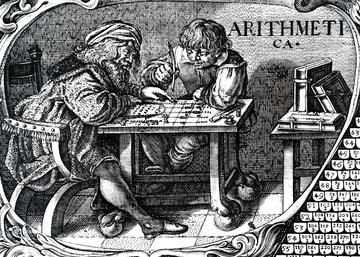
We will ask who learned mathematics and why: what the backgrounds and trajectories were of individuals who made the decision to seek mathematical education for themselves, and what the characteristics were of families that decided to seek mathematical instruction for their children. These narratives include those of private, individual study as well as those of instruction guided by a tutor or in a school. They will provide us witha picture of widening social and geographical contact with mathematical instruction across the hundred years of our project’s scope. They will enable us to understand who benefited personally by learning mathematics, and who was left behind.
We will also ask who were the teachers and which were the schools that offered mathematical instruction. We will seek to understand the careers of mathematical teachers, whether in itinerant private practice, in schools or in other institutional settings such as on shipboard. We hope to find out how far teachers and schools led the way in accepting the the new narrative about the economic and personal importance of mathematics, and how far they merely followed demand from individuals or families for a new emphasis on mathematical education.
And we will ask, finally, which were the instutions that were active in promoting and subsidising mathematical education, which were indifferent and which actively resisted the change. From local charities and foundations supporting individual schools, to institutions such as the Royal Navy and the Board of Ordnance, where was innovation to be found in atititudes to mathematical education? Who acquired a belief in the social and epistemic importance of mathematics, and who remained sceptical? We will attempt to create a picture of how the the attitudes and agendas of those with political and intellectual power created change in mathematical education, but also of how far change in fact proceeded from the bottom up, through the agency and agendas of those who taught and learned
Outcomes
The period we will study saw a change from a finite set of 'mixed sciences' to a sense that there was almost no limit to the areas of life and culture to which mathematics might be applied. The outcome was a world in which mathematics had new prominence and new importance, and in which individual trajectories could depend sharply on a willingness to embrace mathematical learning. It was a sharp change in the English population’s mathematical skills: a topic which has never subsequently ceased to be of interest and concern to governments.
Our project will broaden and deepen our understanding of how mathematics acquired its remarkable place in early modern culture, and will help to characterise the basis in population-level mathematical skills that made the scientific and industrial revolutions possible. It will contribute to our understanding of how mathematics acquired its present position of social and cultural importance, through a case study on individual and collective experiences of mathematics, and on how populations acquire mathematical skills and attitudes to mathematics.
Philip Beeley, Yelda Nasifoglu and Benjamin Wardhaugh

