UNIQ+ research internships
UNIQ+ research internships are fully funded summer internships designed to provide students from under-represented and disadvantaged backgrounds with the opportunity to experience postgraduate study at Oxford.
UNIQ+ aims to provide a real day-to-day experience of postgraduate research. During the seven-week programme students will undertake a research project, attend training skills sessions and receive information on graduate study.
Our intention, is that everyone who takes part will gain confidence, skills and experience that will enhance both their CV and any future postgraduate applications. During UNIQ+, students will live in college accommodation and experience life as a graduate student in Oxford. Social activities, including some organised lunches and dinners, will introduce students to our community and to some of the University of Oxford’s famous traditions and locations.
The 2026 internships will take place July - August 2026
2026 Graduate Internships
There are 5 UNIQ+ History internships available in 2026. Please visit the UNIQ+ website to find out more and apply.
Oral History and lived experience in mind brain health
Epilepsy affects more than 50 million people worldwide, with a disproportionate burden in low-to-middle income countries where the effects of epilepsy-related stigma are the most severe. This project will contribute to a well-developed Embedded Oral History Project that incorporates the lived experiences of people living with epilepsy into research, advocacy, and education. We are currently developing The Oral History Project and Repository as part of the Centre for Global Epilepsy.
You will work with multiple disciplines across the Humanities and Global Health to carry out historical and/or global health research, health communications and advocacy materials, and the development of social media or research content in epilepsy or Mind Brain Health. Projects will consider individual interests and may be explicitly historical in nature or may work across Humanities and Health related disciplines.
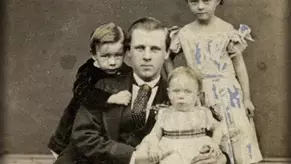
Conceptions of parenthood in the late nineteenth century
This project would explore the different conceptions of parenthood articulated in the journal of the Parents' National Education Union - the Parents' Review - edited by Charlotte Mason, in the period 1880-1920 in order to examine how ideas of motherhood and fatherhood evolved over the period, and to trace the impact of new pedagogical ideas, changing ideas of gender, and the extension of schooling before and through the Great War.
The Newton Project
You will learn basic information relating to the life and work of Isaac Newton, and more generally in the history of science. You will work with leading historians and practitioners of digital humanities, and will receive training in the use of AI-enhanced analytic tools for creating data (including but not limited to transcribing handwriting and printed materials), both contributing to and analysing the large dataset comprising the Newton Project.
This project is aiming to create an Open Access digital edition of all of Newton's published and unpublished writings by 2030. You will gain knowledge both of Newton and his ideas and also of state-of-the-art historical research into these topics. You will also be introduced to key techniques and approaches in the use of AI in modern humanities research, thereby acquiring key transferable skills.
Religion and the life-cycle in Elizabethan England
The history of Reformation religion in England is frequently studied separately from the social history of the period. This project seeks to bring together the experiences of birth, marriage, and death with the religious faith and practice which contemporaries used when going through these rites of passage in an age of religious transition. You will work in one of these three areas (birth, marriage, and death), examining a range of sources including treatises, homilies, diaries, letters, plays and poetry. You will be asked to formulate ideas about how early modern society understood these life experiences within a religious framework.
Conservatism in the Atlantic World in the nineteenth century
You will work on the Leverhulme Trust-funded project "Conservatism in an Age of Revolution", which attempts to map and explain the emergence and spread of the language of conservatism in the US, Britain, Latin America and other countries in the period between about 1830 and 1900. You will be given a specific set of sources (in English, or, if you have reading knowledge in Spanish, French or German), such a run of newspapers or magazines, and asked to map out the use of some key political terms, noting their context and offering some thoughts about their use and how they changed over time.
2025 Graduate Internships
On Tour: Statecraft and the Politics of the “World Tour” across Empires
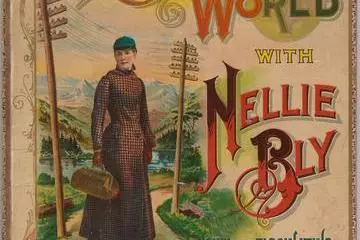
The final third of the nineteenth century was an era of the mass consumption of tall tales of global adventure from Nellie Bly’s seventy-two-day circumnavigation of the globe in 1889 to Joshua Slocum’s first solo circumnavigation of the earth by sail between 1895 and 1898. But, outside of mass popular adventure, world touring became a practice of knowledge-making, national and imperial development, and statecraft around the world.
Oral History in Global Epilepsy and Mind Brain Health
This project gave interns an opportunity to join a multi-disciplinary team of historians and medical/neurology professionals engaged in research and public outreach to improve the quality of life of people with epilepsy in resource poor settings.
Epilepsy is a highly stigmatised condition with a long history of social exclusion. It is often associated with additional mental health conditions and myths about its causes and treatment. The newly launched Centre for Global Epilepsy works with embedded oral history projects, technology development, and neurology in Oxford and across sites in Africa, India and Brazil.
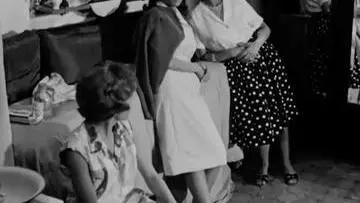
African women and decolonisation: nationalism, transnational networks and sisterhood 1920s-1960s
This project explored how we use archives and other sources held at the Bodleian Libraries to examine the role of African women in twentieth-century anti-colonial struggles – through strikes, street demonstrations, journalistic writing and transnational networks.
This research was a key preparatory stage of an exhibition proposal to the Weston Library.
Feminism, democracy and transnational links in the early twentieth century
This project gave interns the opportunity to investigate a key moment in feminist history and interrogate the question ‘which ideologies shaped early-twentieth-century feminist thought?’ Historians have long recognised that the movement for the Unification of Italy (c. 1833-1871) had a particular hold on the imagination of British feminists in the mid nineteenth century who were inspired by the liberal and emancipatory politics they detected among Italian Republicans. It is less widely known, however, that these links continued to exert a powerful pull well into the twentieth century.
This project examined this important moment in transnational feminist history. It considered how women’s rights activists in Britain drew on ideas and memories of Italian nationalism, unification and democracy during the course of the suffrage campaign, through attention to political, periodical and life writing, in order to better understand the transnational connections of both feminism and liberalism.
‘A word to the wives’: Letters from spouses in twentieth century British election literature
This project gave interns the opportunity to interrogate how far gender continued to shape British politics in unexpected ways long after the enfranchisement of women. Election literature is used by political candidates to set out their values, priorities, interests and achievements. But throughout the twentieth century, many candidates drew on an unexpected source to endorse them: their spouse.
Letters from spouses—almost always wives—were used in many different ways: to position their husband as an ideal ‘family man’; to stress his frequent absences serving his constituency; to imply voters might get a ‘two for the price of one’ deal; and to make a direct appeal to women. Not only does this suggest a great deal about what candidates thought voters were looking for: it also indicates the ongoing barriers that women candidates, unable to offer this ‘package deal’, were up against.
2024 Graduate Internships
Mapping the rise of Christian kingship, 300 - 840
You will work on gathering materials for the appendices of a forthcoming book on Christian kingship in the late antique and early medieval worlds. You will help identify and gather a collection of relevant maps that will supplement the text; there is also a possibility of working with mapping software to produce new maps if the researcher felt that was necessary. You will undertake research for other supplementary materials (lists of rulers and family trees) and collate the required information.
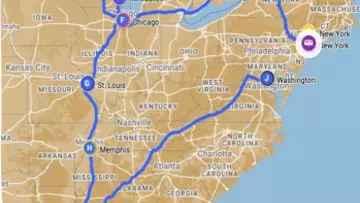
Middle Eastern migration in 19th and 20th-century North and South America
This project will give you the opportunity to join a large-scale collaborative research project that explores the lives and experiences of Middle Eastern migrants who travelled from the Ottoman Empire to the Americas in the late 19th and early 20th century.
2023 Graduate Internships
International banking connections and international commerce 1870-1980
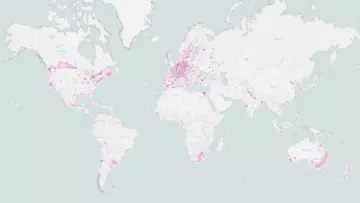
International bank connections are a fundamental building block of globalisation. The Global Correspondent Banking 1870-2000 (GloCoBank) project aims to uncover how banks made these connections in the 19th and 20th centuries using primary documentary sources and compiling and analysing new data sets derived from historical sources. In the Summer of 2023, the project welcomed two UNIQ+ interns who focused on two aspects of the project’s research: 1) using data drawn from The Bankers’ Almanac to analyse the geographic distribution of countries with correspondent banking connections to London between 1901 and 1913, 2) writing a case study of Edward Holden’s role in the expansion of Midland Bank’s correspondent banking network between 1891-1920 using records from the HSBC Archive. Read more about their research below.
Childhood and Inequality in Modern Britain
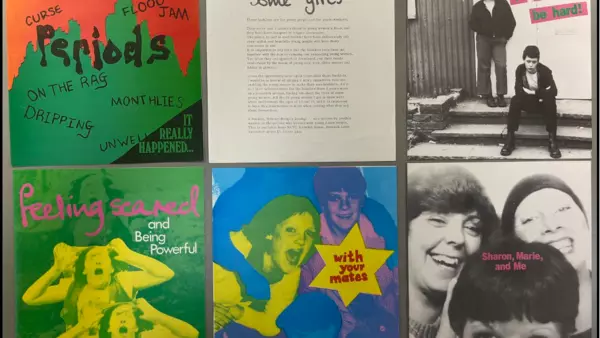
This UNIQ+ project asked the three interns to design their own research projects to explore a little-known aspect of childhood and inequality in modern Britain. Most of what we know about the past tells the story of adult actions, beliefs, and experiences. Oxford University's History Faculty has hosted the UK's only Centre for the History of Childhood since 2003. Over the last twenty years researchers have sought to find sources to include the experiences and voices of the young in the histories we write. The UNIQ+ interns in summer 2023 focused on young people who were marginalised not only because of their youth, but also because of other characteristics, such as their class, gender, or sexuality. The interns developed projects that started to explore promising new archives and approaches to studying youth in 1960-90s Britain.
The Mighty Dead: Royalism and Popular Culture during the English Civil War
The noble deaths of English aristocrats become major news stories in the 1640s, sensationalised in the popular press as well as memorialised in stone and in literature. This research project explored how these moments of drama and tragedy became a crucial part of royalist popular culture, reflecting and shaping contemporary perceptions of honour, masculinity and virtue. Interns used printed pamphlets and newsbooks alongside portraiture and battlefield material culture, accessible in the Bodleian library and Oxford. The project was co-supervised of Dr David Scott of the History of Parliament Trust (HoPT).
Oral History and the lived experience of epilepsy in low to middle income countries
This project brings together a dedicated multi-disciplinary team of medical/public health professionals and historians to significantly improve the quality of life of people with epilepsy in resource poor settings. Epilepsy is a highly stigmatised condition with a long history of social exclusion and discrimination. We work in Kenya, South Africa, Zimbabwe, Brazil and India with local collaborators in order to implement 'embedded oral history projects' that inform public health initiatives.
2022 Graduate Internships
Exploring the Allestree Library
Tucked away above the cloisters in Christ Church is a large collection of books bequeathed to the University by Richard Allestree, a Regius Professor who died in 1681. Allestree lived through the civil wars and his collection offers a window into the scholarship, reading, and book collecting practices of early modern Oxford. In 2022 two UNIQ+ interns spent time examining the collection, especially the hand-written marks of annotation and provenance found in many of the books. Here they share the fruits of their research. This internship was supervised jointly by the Faculty of Theology and Religion and Faculty of History.