

Life and Death in Tudor Prisons
Professor Steven Gunn and Dr Tomasz Gromelski are leading a new research project, funded by the AHRC Curiosity Award scheme, which aims to transform our patchy understanding of Tudor imprisonment.
Our knowledge of Tudor prisons is patchy. Big-name prisoners in the Tower of London – Perkin Warbeck, Anne Boleyn, Robert Devereux earl of Essex – catch the eye. Prisoners for religion on both sides of the Reformation divide – Anne Askew, Edmund Campion – found devotees to chronicle their sufferings. London playwrights made knowing jokes about the capital’s gaols and even set scenes in them. Moral reformers saw the new workhouses, led by London’s Bridewell, as places to teach the pilfering vagrant or part-time prostitute the virtues of honest hard work. But all this does not tell us much about the average prisoner in the average prison at Exeter, York or Norwich, awaiting trial for theft or detained at their creditors’ pleasure until they could clear their debts.
One source that does shed light on life in prisons is the record of death in prisons. Coroners investigated prison deaths to show, as the Oxfordshire coroner put it in the controversial case of one treason suspect in 1590, that the prisoner died a natural death and had not undergone any harsh treatment by the keeper of the gaol or by any other person to hasten his passing. We knew from a long-running project on inquests into accidental deaths, resulting in a book published in 2025 (An Accidental History of Tudor England), that coroners’ findings could be used to reach into otherwise inaccessible corners of Tudor life. So we applied for Arts and Humanities Research Council funding to look at the thousands of inquests into prison deaths handed in by county coroners to the touring assize judges across the sixteenth century and filed away in the records of the Court of King’s Bench, and fortunately we were successful.
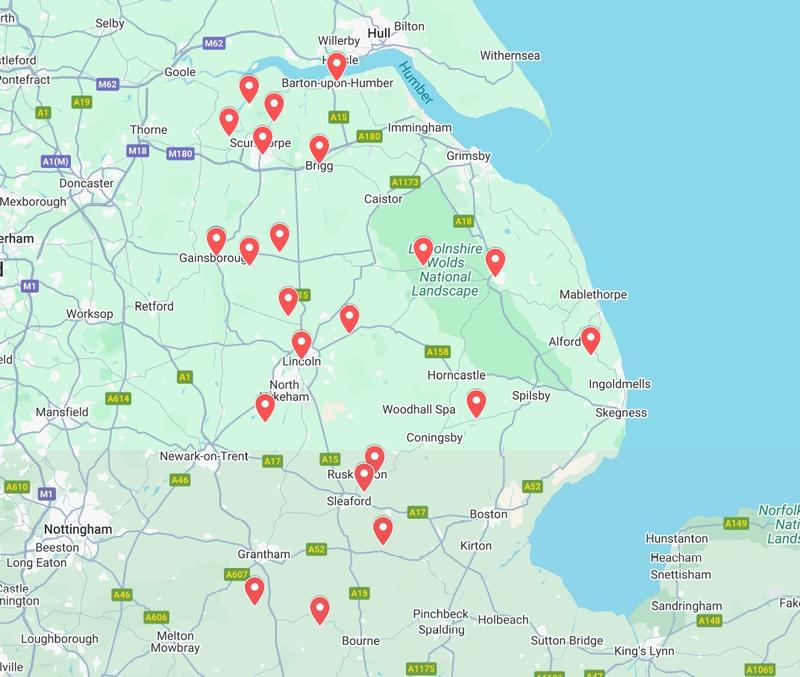
Lincoln Castle goal, 10 November 1546 - 10 March 1547
A pilot project had shown the range of what could be discovered. The inquests cover at least two dozen county gaols, plus town prisons like those at Newcastle, York, Hereford and Thetford, and bishops’ prisons for criminal clergy at Eccleshall Castle, Rose Castle and Wolvesey Castle. They show us the range of prisoners too. One in six who died was a woman, some giving birth in prison. Most men detained were labourers and husbandmen but there were also sailors, craftsmen and clerics, yeomen, gentlemen and esquires, even the author of a famous mathematics textbook, Robert Recorde. Sometimes the inquests give us extra detail about where people came from. Twenty-five prisoners who died in Lincoln Gaol in 1546-7 were arrested in twenty-two different places around the county. Sixty-three victims at Launceston Castle in 1597-8 came from forty-nine home parishes, an average of 33.4 miles from Launceston and widely spread: from Penzance and St Ives to Devon, Wiltshire and Middlesex.
Some reports described routes to prison, usually arrest by a Justice of the Peace but sometimes by town constables or the Council in the North. Rather more specified the prisoner’s offences. Felonies, presumably theft, were commonest, but there were murders, rapes, burglaries and treasons. Catholic recusants might be locked away for refusal to attend church, like Isabel Bowman who died at York in 1599, while those convicted of witchcraft that did not cause death could be gaoled for a year. In unhealthy conditions – numerous inquests blamed deaths on the sickness of the house or the infirmity of the gaol – such a sentence might of course hasten decease. Cecily Weste died in Canterbury Castle ten days after her sentencing for ‘wytche crafte’ and Joan Dickes in Colchester Castle three months after she was found guilty of bewitching the cows, sheep and pigs of three different farmers. Those imprisoned for debt, like Stephen Barton at Cambridge Castle, might be let out to negotiate with their creditors but succumb to disease before a deal was struck.
The inquests tell us less than we might like about the everyday realities of prison life, but there are glimpses. While two-thirds of the inmates at Colchester in 1502 were chained to a wooden beam in the dungeon, Isabel Bowman died in bed and John Boothe had an accident jumping in ‘the sporting place’ at Nottingham Castle. Some prisoners were said to have died of the cold or of lack of clothing, more from hunger, and poor Robert Darsy from sadness. John Vaughan had to drink his own urine out of his hat when the prison-keeper refused him beer in the town gaol at Eye in Suffolk.
Social interaction can be seen in the summoning of prisoners to sit on the inquest juries reporting on the deaths of their fellow-inmates. Some sat repeatedly as jurors, and one must wonder whether the investigation of newly dead bodies spread disease even more effectively than incarceration. John Gyller of Portlemouth, Devon, a shoemaker, sat at Exeter Castle inquests on 25 and 26 June, 2 July and 8 July 1598 and was dead by 25 July. The will that Robert Recorde made in prison shows that jurors might be more than anonymous fellow-sufferers. Of those who sat at his inquest, Sir Richard Corbett and Richard Thymbleby witnessed his will and Nicholas Adams was given first chance to buy the law books from his estate. Wills, like the assize court records surviving for the Home Counties from 1558 and a handful of lists of prisoners compiled when one sheriff handed over custody of a county gaol to his successor, can be used to set our findings in context.
Inquests also show the disease regime in prison. Fevers or agues were common but so was dysentery, while others had the pox, dropsy or pleurisy. Epidemics swept from gaol to gaol in bad years like 1597-8, north to Derby and York, south to Winchester and Maidstone, east to Norwich and Bury St Edmunds, west to Ilchester – the Somerset county gaol, which filed more deaths than any other in 1598 – and Launceston. Prison diseases can be compared with those reported among the population outside, where sudden deaths might also be registered in inquests. Here other vulnerable groups come to the fore, such as the wandering poor and the unmarried mothers of stillborn children. They suffered a wider range of fatal ailments, from black and yellow jaundice and a diseased breast to worms in the head and, in an age of astrological medicine, ‘a planett’. There are also accounts of unsuccessful medical treatment, like the baths administered to Thomas Edwardis, a Sussex clergyman, to rid him of the ‘Frenche pokkes’. Our co-author on publications about the history of health will be Dr Leah Astbury of the University of Bristol with her expertise in early modern disease regimes and medical treatments.
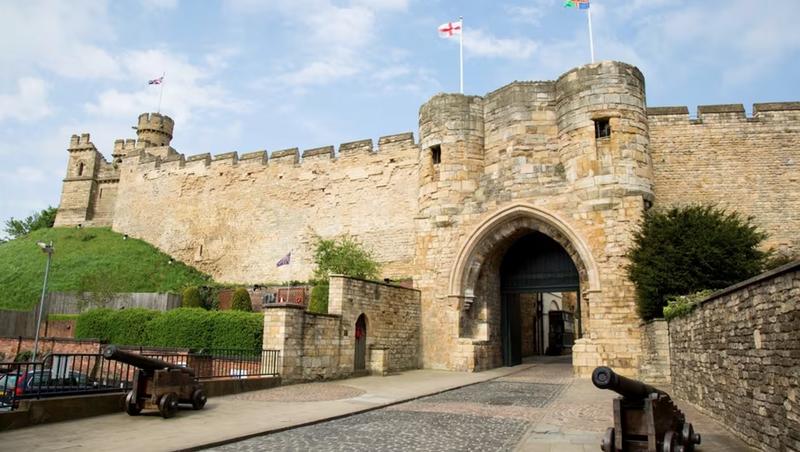
Lincoln Castle
A dozen castles that feature in our inquests as prison sites survive to this day, often open to the public. The final feature of our project, facilitated by Dr Rachel Delman from the university’s Heritage Partnerships Team, is to work with some of these sites to develop materials for displays, education sessions and live interpretation that bring the experiences of Tudor prisons and prisoners to life in the places where they happened. Our main partners will be Lincoln Castle and Oxford Castle, but we are also involving English Heritage for sites such as Launceston and Carlisle and the organisations that care for other castles as museums. Our hope is that thinking about Michael Moore, locked up in Lincoln as a vagabond in 1589, or Elizabeth Carlehyll of Baringdon, Berkshire, spinster, convicted for murder in 1540 but reprieved from execution and returned to Oxford gaol only to die from consumption, will connect modern visitors with those who lived and died when a trip to the local castle was a fate to be feared rather than a family outing.
- Steven Gunn and Tomasz Gromelski

