Stephen Baxter : a Memorial
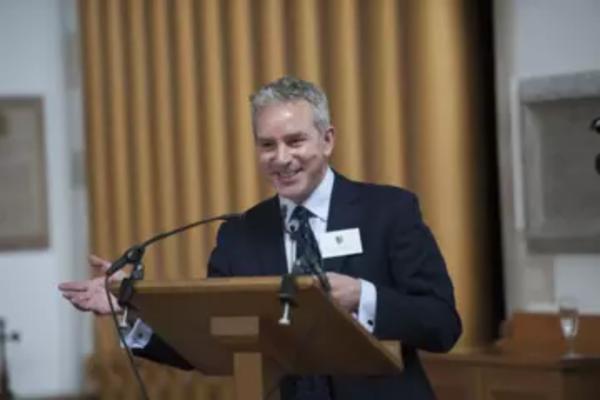
Readers will be saddened to learn that Stephen Baxter, Fellow and Tutor of St Peter’s College, Lecturer of Merton, and Professor of Medieval History, has died unexpectedly at the age of 56.
After taking a First in Schools at Wadham in 1991, Stephen spent six years in banks in the City of London, amongst other activities surfing on the wave of privatisation that swept across post-Communist Eastern Europe. But the lure of academia eventually proved too strong even for Mammon – however busy Stephen became in the 90s, he sustained a habit of serious historical reading – and he returned to Oxford in 1997 to write a doctorate under the supervision of Patrick Wormald.
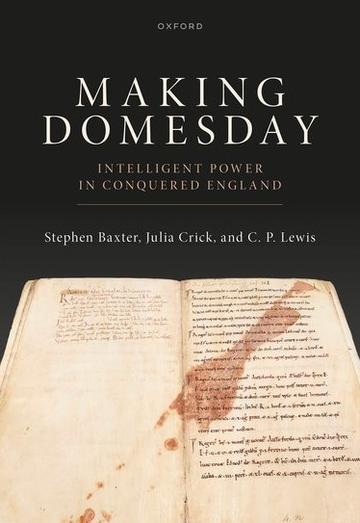
His subject – a neglected one – was the earls of Mercia in the half century prior to the Norman Conquest. Stephen approached it with the serious-minded focus instilled by his career in high finance. Domesday Book, though compiled in 1086, was one of his most important sources for the early eleventh century. It is easy to see how making sense of the Book’s overwhelming and now forbiddingly inscrutable masses of data would have appealed to someone so experienced in assessing multiple spreadsheets. The Book would remain his principal intellectual interest, culminating in the monumental Making Domesday: Intelligent Power in Conquered England which he, Chris Lewis, and Julia Crick published in 2025, at the end of their joint Leverhulme research project. The project was prompted by the rebinding of Exon Domesday, the only surviving ‘circuit’ (i.e. regional) return for the south-western shires. The opportunity to examine how this precursor of Domesday Book was put together was a once-in-many-generations chance to refine understanding of the process. Making Domesday will remain in perpetuity one of the three or four most significant publications on the Survey and the Book, a subject which has inspired some of the very best medieval scholarship over the centuries. Stephen’s principal contribution was to establish how the process of data collection and arrangement must have operated between January and August 1086. A love of flow charts was one lasting residue of his career in banking. In passing, he also took a showman’s pleasure in unmasking, to the astonishment of the world’s media, the Book’s scribe.
I had got to know Stephen while he was a research student, when he published an essay which my own supervisor, J.C. Holt, a formidable critic seldom much impressed by anyone or anything, would describe in print as ‘beautiful’. He was elected to a Research Fellowship at Magdalen in 2001, and very soon disappeared to a permanent job at King’s College, London, where he participated in his first big collective research project, on Anglo-Saxon Prosopography (necessarily based primarily on Domesday), and ran the Norman Conquest Special Subject. We saw each other quite often during that period. He returned to Oxford in 2014 to succeed Mark Whittow as medieval Tutor at St Peter’s and Merton. It is in this capacity that most readers will have known him.
He immediately became heavily involved in the Norman Conquest Special Subject, of which I am the convenor (but which, in a rare lapse of academic judgment, he had failed to take as an undergraduate). The weekly classes have always been initiated by me and another postholder arguing about some fundamental category of evidence. The arguments had been most overtly intense with Patrick Wormald, but he had retired c. 2000. As if by instinct, Stephen assumed the role once filled by his supervisor, and the ding dong of the 90s was resumed. In truth, one could slip far fewer cigarette papers between my views and Stephen’s than between mine and Patrick’s; but the takers of the Subject would have been unlikely to perceive that, at least until the term was largely over. We both took a certain relish in these heated exchanges, as we hammed up our respective positions. And of course it was not entirely a matter of acting. I remember his being particularly riled in 2022 by my characterisation of the Conquest as not a conquest at all, but a Special Military Operation. His occasional, abrupt shifts into the persona of William I, bawling at his terrified officials (a.k.a. the undergraduate audience), and smashing his fist on the desk, never failed to make them jump in their seats. It didn’t take long for them to feel compelled to join in the debate, if only to restore a modicum of moderation. Things would then take off. At their best, these sessions would last for two hours. Then Stephen and I would repair to a local hostelry, and sometimes go out for supper (I noticed that the intensity of the class often left him very hungry).
It is hardly surprising that working together like this, examining together, supervising research students together, and reading each other’s drafts, means that you get to know each other very well over the years. Despite the ferocity of his William I impression, he was more forgiving of undergraduate lapses than I am, and tended to be more restrained in his expression of his views – more out of prudence than lack of conviction, I thought. He took other aspects of his life very seriously indeed, whether it was being Vice-Master of St Peter’s, Chair of Schools, or playing chess and cricket (his favourite games). His attachment to the delightful cottage in the wilds of Cambridgeshire in which he had grown up meant that he was determined to go on living there, however impractical it might be. His love for his children, Imogen and Jack, was profound and moving. I never saw him happier or more at ease than when he was in their company. Pupils and colleagues will join them in mourning his passing, not just for the further superb works of historical scholarship which will now never be written.
George Garnett