Dr Ying Tong
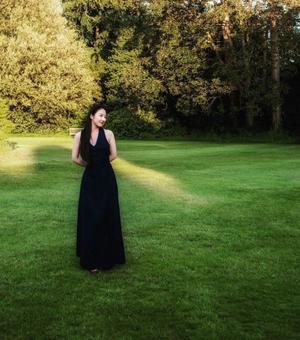
Associate Member
I have long been reflecting on how various individuals and groups, such as intellectuals, labourers, and “new women”, emerged as meaningful social categories and historical agents and how they have navigated modern Chinese history since 1900, a period marked by profound political and cultural transformations.
My current research focuses on popular religious rituals among middle-aged and older women in southeastern China. During my DPhil at the Faculty of Asian and Middle Eastern Studies at the University of Oxford, I explored the self-fashioning processes of Chinese women warriors during the War of Resistance against Japanese Aggression (1937–1945). Prior to that, I completed my academic training in the Chinese Department at Peking University (2017–2020), where I studied modern Chinese literature, with a particular focus on the political and social engagement of early 20th-century Chinese intellectuals, especially female writers.
Outside academia, I write stories that delve into themes of self-discovery amid cultural shifts and social transformation in contemporary China. My debut novella, Prosper in the Eastern Wind, published in Shanghai Literature in 2018, explores the lives of self-employed workers in the logistics industry after the 1990s. Since then, my writing has often focused on the resilience of individuals navigating life’s challenges, generational tensions, and the fading world of obsolete professions. Beyond China, I also write stories set in global contexts, such as life during the pandemic, tribal cultures, and juvenile delinquency.
For me, both research and storytelling are ways to interpret the realities of individuals. One of my expectations is to forge various connections between my readers and the protagonists of my research or stories, rooted in understanding.
Research Interests
Current Research:
My current project explores why and how middle-aged and older women in southeastern China have participated in popular religious rituals over the past decade (2010–present). Against the backdrop of a widespread traditional cultural revival, supported by both local societies and government initiatives, religious practices – particularly those rooted in Buddhist, Taoist, and folk traditions – have become increasingly important to some women’s daily lives in both rural and urban areas like Ningbo and Hangzhou. This is evident in a variety of practices, from collective scripture chanting and the creation of ritual symbols (“vei” and “die” in the local dialect) to household ceremonies such as inviting Bodhisattvas into the home, candle-lighting donation rituals, and regular temple worship.
While these activities do not always reinforce doctrinal Buddhist or Taoist beliefs on life and death, they reveal a growing secular utility and a potential avenue for elderly care. Most of the women involved were born in the 1950s and 1960s, having experienced both the early PRC era and the rapid social transformations of the Reform period. Their engagement in these rituals cannot be understood in isolation, as it is shaped by their early-life experiences, shifting social structures, and evolving personal needs. Through fieldwork combining ritual observation and oral history interviews, I examine the personal and social meanings behind these practices. Beyond spiritual devotion, these rituals provide spaces for socialisation, emotional healing, post-retirement routine building, and even small-scale income generation through ritual services.
Doctoral Research:
My doctoral research, Heroines, Us, and Intimate Ties: Chinese Women Warriors’ Self-Fashioning during the War of Resistance against Japanese Aggression (1937–1945), examines how women in wartime China constructed and solidified their self-images as different types of warriors. These women operated across diverse settings, including public mobilisation, frontline service, secret operations, and rural reform. Some were affiliated with the Chinese Communist Party (CCP) or the Kuomintang (KMT), while others navigated between, beyond, or outside these political factions. My work highlights a spectrum of heroic archetypes, including chivalrous and romantic warriors, practical labour providers, unseen heroes in disguise, and those embodying “collective heroism” in contrast to “individual heroism.”
To capture the complexity of their self-fashioning, I move beyond conventional analytical frameworks of patriotism, feminism, or party loyalty. Instead, I focus on the intimate ties these women forged with the communities they served or worked alongside. These connections – whether familial (both real and fictive kinship), romantic, imagined bonds with their audience, or fluid forms of comradeship – shaped how they navigated their roles, engaged with their missions, and perceived their own heroism. I argue that these relationships were not just peripheral but pivotal, influencing their work methods, gender performances, recognition of merit, and political allegiances. My study offers a fresh perspective on these women as emotional and moral agents while contributing to broader discussions on revolutionary subjectivities and the interpersonal mechanisms underpinning them.
Personal Website: https://yingtong.work/