3-year British Academy Postdoctoral Researcher and 4-year Postdoctoral Researcher appointed
We are delighted to welcome two new postdoctoral researchers to the Faculty of History and to Mansfield College.
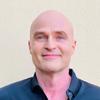
Dr Kari Silvola will begin his 4-year postdoctoral term in October, funded by the Finnish Kone Foundation. Kari is working on international queer cultural and erotic networks, anchored in the circulation of work by Tom of Finland in the immediate post war decades.
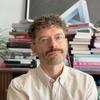
Dr Kamil Karczewski will be with us as a British Academy Postdoctoral Researcher for three years from December, working on how the queer minoritized subject emerged as a concept in interwar East-Central Europe and, in the subsequent decades, spread across the West and beyond.
Kari and Kamil will be mentored by Professor Matt Cook and affiliated with the Centre for Women’s, Gender and Queer History.
Matt says:
Kari and Kamil’s cutting-edge work will significantly extend our understanding of transnational circulations of ideas and cultures, and show how these played out in localised understandings and experiences of queer identity and community. They will make an invaluable contribution to the research culture and community of the Centre for Women’s Gender and Queer History, as well as to Mansfield College and the Faculty of History.
Kamil says:
I am thrilled to bring my research to Oxford’s Faculty of History and Mansfield College, whose values, ethos, and remarkably diverse community promise a nourishing intellectual home for my current project, which traces the early minoritisation of queer subjectivities across Central and Eastern Europe and the transatlantic Anglosphere. I am looking forward to learning, sharing ideas, exploring new ways of writing history.
Kari says:
Joining Mansfield College and the Faculty of History and working with Matt Cook is a remarkable opportunity and a genuine privilege. Matt’s pioneering work on queer histories, particularly on the relationship between sexuality and place, speaks directly to many of the questions at the heart of my own project. The opportunity to discuss my research with him and with colleagues working on closely related histories of sexuality, queer lives, and spatial experience at the Centre for Women’s, Gender, and Queer History is one of the aspects of the Fellowship that I find most exciting.

