Professor Lyndal Roper awarded the Holberg Prize 2026
The History Faculty is delighted that Professor Lyndal Roper, Emeritus Regius Professor of History at Oxford University, has been awarded the prestigious Holberg Prize for 2026.
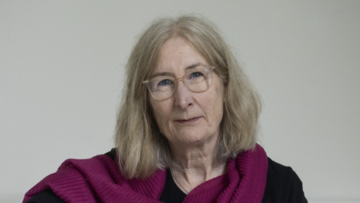
During the 2026 Holberg Week, held from 1 to 4 June in Bergen, Lyndal took part in a series of prestigious events. On 2 June, a symposium was held on ‘Where is History Moving, New Directions in Writing the Past’. Lyndal chaired this session, and participants included her Oxford colleague John-Paul Ghobrial and Barbara Savage, a former Harmsworth Visiting Professor of American History in the Faculty.
On 3 June, Lyndal led a masterclass entitled ‘Bodies, Gender, Psyche, Movement’. The participants were five PhD candidates from Nordic countries, who each gave a 5-minute presentation related to the theme chosen by the Laureate.
Later that day, Lyndal gave the 2026 Holberg Lecture ‘Who owns Fertility? The Reformation’s Sexual Politics’.
On 4 June, the Award Ceremony for the 2026 Holberg Prize and Nils Klim Prize took place. The Prizes were conferred by Minister of Research and Higher Education Sigrun Aasland, and the ceremony was followed by a short reception.
In Lyndal’s acceptance speech, she said:
The Holberg Prize means so much to me because, as it happens, I’ve read the work of nearly all the previous winners, and they have been among the people whose work inspired me most. As a postgraduate in London, I heard Marina Warner give a fabulous open-ended paper on Joan of Arc, honest about all Joan’s contradictions. It showed me how a historian could set out their perplexity, and how sources can point in different directions. Paul Gilroy spoke inspiringly at my college, to move things on from its legacy of Cecil Rhodes and imperialism. I miss Natalie Zemon Davis more than I can say. She showed what women’s and gender history could be, and throughout her life she was always moving ahead, with her wide sympathy for people of all cultures and religions. And I wish that Rebekka Habermas, Jürgen Habermas’s daughter, could be here, because she welcomed me, gave me her friendship; and did so much to change what history could be in Germany and who could write it. She died far too soon.
The Holberg Board has chosen the people who have been original, path-breaking, who have changed how we think, and they have also chosen people whose work was based on values and commitment, whom I’ve always admired personally. That’s why I’m overwhelmed by this award, which I think recognizes the work of an entire generation of historians, philosophers and thinkers of many disciplines who have rewritten the history of women, sex and gender and taken it in so many different directions. And you have seen this week where they will take it, and how they are responding to the challenges we face today.
You can read the full speech here.
Photo credit: John Cairns

