Dr Benjamin Wardhaugh
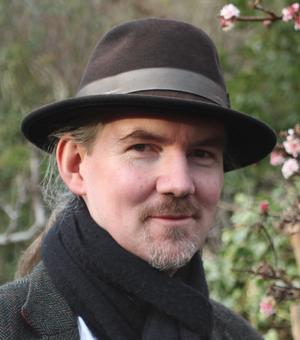
Senior Research Associate
I am a historian of mathematics; I have held fellowships at All Souls College, Oxford and at the Warburg Institute, London, and am currently leading an AHRC-funded research project on early modern mathematics education in the History Faculty at Oxford University. I have published widely on topics in early modern mathematics and its cultural presence, including on the reception of classical mathematical texts and on practices of mathematical reading. I have also written several books for a general audience, on topics including the global history of counting practices and the longue-durée trajectory of the Euclidean Elements. My books have been published in the UK and the USA, translated into four languages, and have received warm reviews in venues from Nature to the Sunday Times.
Research Interests
My research centres on the history of mathematics, particularly its everyday uses, cultural roles, and transmission from the early modern period through to the early nineteenth century. I explore how mathematical ideas shaped, and were shaped by, broader intellectual, social, and material cultures in Britain and Europe. At the core of my work lies a fascination with the practical lives of numbers—arithmetic in almanacs, textbooks, and popular print—alongside the grander narratives of scientific exchange and textual traditions. I am a former secretary of the British Society for the History of Mathematics and former editor of the British Journal for the History of Mathematics. My textbook, How to Read Historical Mathematics, is widely used in teaching history of mathematics at undergraduate level.
My 2007 book Music, Experiment and Mathematics traced acoustics, tuning theories, and experimental philosophy through figures like Isaac Newton and Robert Hooke. I investigated how mathematical models of harmony intersected with empirical science, influencing everything from organ design to theories of sound. During twelve years of fellowship at All Souls College I continued this work with four volumes presenting key source texts in that area, dealing with the musical writings of John Birchensha, Thomas Salmon, John Wallis and René Descartes, edited in collaboration with colleagues from musicology and linguistics.
In subsequent work I have turned towards more general questions about the cultural location of mathematics in the early modern world and beyond. I have worked in particular on the vibrant, often irreverent popular mathematics of Georgian England. In Poor Robin’s Prophecies (2012) I studied almanac culture – where prophecy, arithmetic problems and satire met – to show how maths permeated taverns, markets, and households. And I undertook a two-year project on the working-class mathematician Charles Hutton, producing a biography (Gunpowder and Geometry), an edition of Hutton’s roughly 130 surviving letters and an online catalogue of his library.
My recent work has extended these interests more widely. My 2016–18 research project on the reception of Euclid’s Elements resulted in a collection of essays on the practices of reading mathematics in the early modern world and a catalogue of the early editions of the Elements of Geometry. A subsequent period at the Warburg Institute in London produced a companion bibliography of the early modern editions of all other ancient Greek mathematical authors. I also wrote a general-audience account of the 'many lives' of the Euclidean text spanning two and a half millennia. And in Counting (2025), I probed how counting practices encode cultural priorities, across six continents from Mayan inscriptions to Enlightenment statistics, from Stone Age tallies to cyber-age algorithms.
Since May 2026 I have been working on a new research project which explores how mathematics was taught in England between 1650 and 1750, and how that teaching evolved in response to the social, political, and economic changes of the period. The project examines how the attitudes and agendas of those with political and intellectual power created change in mathematical education; but it also foregrounds the agency and agendas of those who taught and learned, and who by doing so created the modern location of mathematics in culture.


