Professor Dame Averil Cameron (1940–2026)
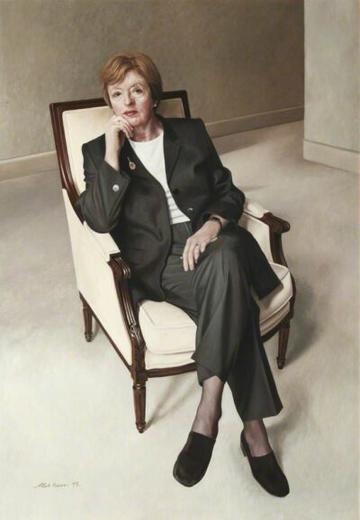
Roscoe, Mark; Averil Cameron, 11th Warden (1994-2010); Keble College, University of Oxford; http://www.artuk.org/artworks/averil-cameron-11th-warden-19942010-222205
The Faculty of History at Oxford is saddened to report the loss of Professor Dame Averil Cameron, who died on 7 April 2026.
Professor Cameron was one of the most distinguished historians of her generation and a scholar whose work reshaped the study of Late Antiquity and Byzantium; she leaves behind an intellectual legacy that has influenced scholars around the world.
Born in Staffordshire in 1940, Averil won a scholarship to Somerville College, Oxford, where she studied Classics. Following a doctorate in Glasgow she was appointed lecturer in classical languages and literature and later Professor of Late Antique and Byzantine History at King's College, London. In 1994, she returned to Oxford as Warden of Keble College, becoming one of the first women to lead a formerly male-only college. She held the position until 2010, and was then Chair of the Oxford Centre for Byzantine Research until her death. Among various honours, she was elected FBA in 1981, CBE in 1999, and DBE in 2006.
Averil’s career was defined by an extraordinary breadth of learning combined with clarity of thought and expression. Her books—which included Christianity and the Rhetoric of Empire, biographies of Agathias and Procopius, and studies of Byzantine dialogue—also included volumes for the general reader, such as The Byzantines, The Mediterranean World in Late Antiquity, Byzantine Christianity and most recently Byzantine Matters. Remarkably, Variorum published no fewer than four separate volumes of her scholarly articles and essays. She also co-edited three volumes of the highly regarded Cambridge Ancient History, ultimately linking the second century with the seventh. A memoir of her extraordinary, pioneering career—Transitions: A Historian’s Memoir—appeared in 2024.
Unlike many mainstream scholars of her time, for whom the Eastern Roman Empire was a peripheral, niche subject, Averil treated the Byzantine world as central to the significance of European, western, and even global histories. She insisted too on the discipline of identifying change between periods and regions, as well as on a theoretically engaged treatment of primary sources, especially (but not only) when it came to matters concerning religion, gender, and power.
Averil was a much-admired member of the large community of students, researchers, senior scholars and emeriti at Oxford, as well as a popular one. She was a fixture at seminars, lectures, and conferences, and played a key role in the fund-raising to secure posts that has cemented Oxford’s role as one of, if not the, most important centres of learning for Late Antique and Byzantine Studies in the world.
Those who knew Dame Averil will remember not only her formidable intellect, but also her warmth, wit, and generosity. She was greatly admired as a scholar, a colleague, and a friend.

