A Celebration of History and its Possibilities: The Award of the Holberg Prize to Lyndal Roper
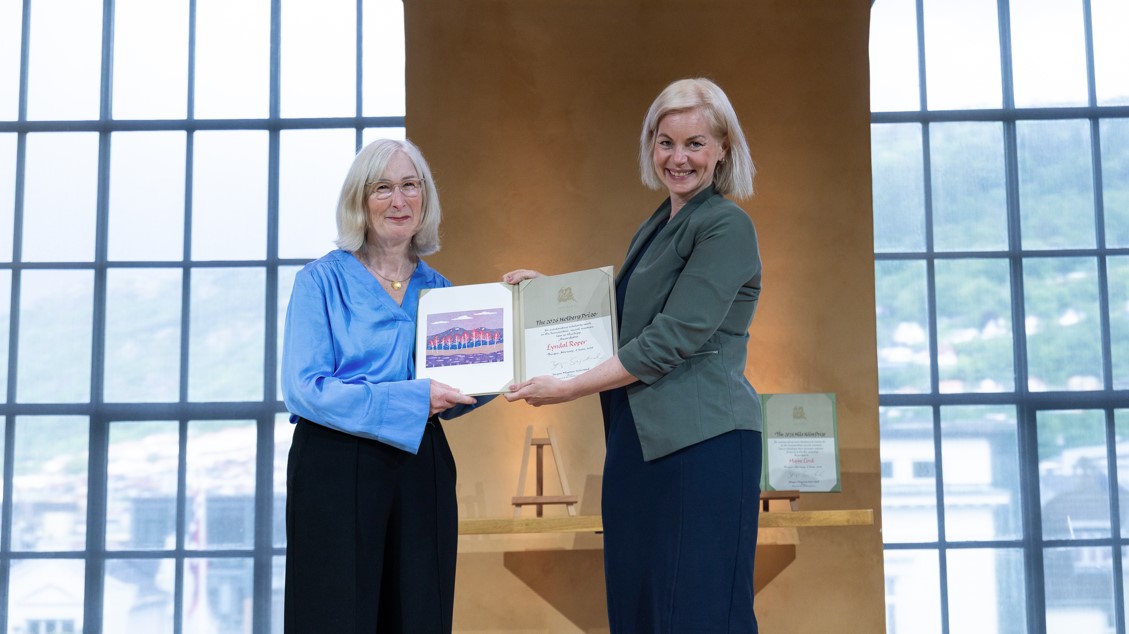
The Holberg Prize was established in 2003 as a way of recognizing the achievements of scholars working fields beyond those traditionally represented by the Nobel Prize. The prize was first awarded in 2004, and its list of recipients demonstrates the major transformations that have taken place in the Humanities and Social Sciences since the late twentieth century: Jürgen Habermas, Bruno Latour, Julia Kristeva, and Paul Gilroy, just to name a few. Among the Holberg Laureates are some of the most distinctive historians of our time ranging from Natalie Zemon Davis whose historical imagination set the agenda for an entire generation of historians of the early modern world, to Michael Cook, a giant in the field of Islamic history, and Jūrgen Kocka with his pioneering works at the intersection of social history, social sciences, and histories of capitalism.
The prize’s namesake – Ludvig Holberg (1684-1754) – had a similarly wide-ranging set of talents. His many writings reflect an eclectic range of preoccupations – part humanist, part historian, part philosopher, and even a playwright with an insightful eye for the transformations taking place in the eighteenth-century world around him. Widely regarded today as the founder of modern Danish and Norwegian literature, his enduring relevance is apparent today in the statues and street-names scattered across Bergen, the place of his birth.
Bergen was the setting for a weeklong celebration of the work of the 2026 Holberg Laureate, our own colleague Lyndal Roper, who was a Fellow and Tutor at Balliol College before becoming the Regius Professor in History in 2011. In the statement that announced their choice of Roper for the prize, the Holberg Committee praised her pioneering work in cultural and social history in three areas – the witch hunts of the Reformation, the study of Martin Luther, and the Peasants War, each the subject of ground-breaking books in 2004, 2016, and 2025, respectively – but also the distinctive combination of gender, embodiment and psychosocial history which has always characterised her work. These are qualities familiar to those of us who have taught or studied with Lyndal, but it was striking throughout the week just how inspirational her work has been to a much wider set of readers, publics, and scholars. In this way, the week’s events proved as much a celebration of Roper’s own work as a testament to the critical ways in which history-writing itself has been transformed in the past three decades.
The week began with a half-day Holberg Symposium organized by Roper on the question ‘Where is History Moving?’. In a packed room of scholars working across several different fields, three historians gave lectures on ‘new directions in writing the past’ based on their own areas of research. Professor Annette Kehnel, Chair of Medieval History at the University of Mannheim, described how history ‘trains the sense of possibility’, using the environmental history of medieval Europe to reconstruct the ways in which societies have always sought out alternatives for sustainability, long before modern practices of recycling or minimalism. Professor Barbara Savage, Geraldine R. Segal Professor Emerita of American Social Thought and Africana Studies at the University of Pennsylvania and Harmsworth Visiting Professor of American History (2018-2019) at Oxford, gave a powerful account of the challenges facing the study of African-American history from a variety of pressure points – ideological, budgetary, and political. Hers was as much a story about History writ large as it was about scholars working in a particular field. The challenges of methodology and context were also the subject of the third lecture, which I gave, on ‘History’s Raw Materials in an Age of Crisis’. Using the close study of the seventeenth-century traveller Pietro della Valle – the so-called ‘pellegrino’ or ‘pilgrim’ known for his adventures in the early modern world – I tried to recover a sense of the difficulties inherent in the recovery and interpretation of complicated, and often fragmentary, evidence. Across all of the lectures and the spirited roundtable discussion that followed, there was a renewed sense of the professional and civic need for historians to convey more effectively the particular value they bring to a world where they are not (nor have they ever been) the only producers of history.
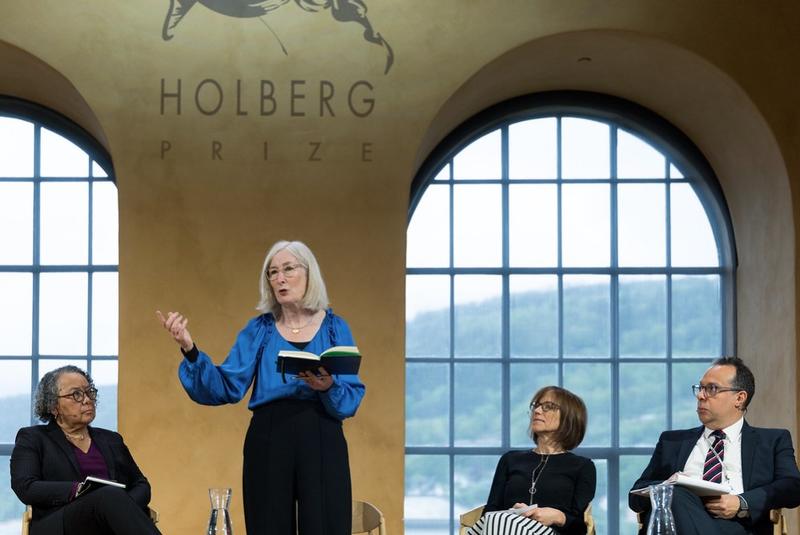
These issues were especially on display in the set of riveting lectures and conversations that Roper presented in Bergen. In a first lecture entitled ‘Who Owns Fertility?’, she set forth a bold reinterpretation of the sexual politics at the heart of the Reformation. It was as insightful for what it revealed about the Reformation as for the role played more generally by sexuality in transformative moments of historical rupture and change. Later in the week, in conversation with the Nils Klim Laureate Majse Lind who works in the field of psychopathology – Roper offered a more personal, reflexive account of the decisions that have informed her historical practice and analysis. The conversation offered a direct window into how one of today’s most creative historians has engaged with central questions animating the work of all historians – from issues of causality to how historians generate narratives of human experience from fragmentary and often incomplete evidence. Hers is a view of history as embodied experience, unfolding within specific landscapes, and brought to life through stories of individuals carried by emotions, sensations, and the intricate recovery of profound and complicated interior and exterior worlds.
The Holberg Prize Ceremony provided a fitting tribute to the ways that Roper’s scholarship and teaching have touched readers, colleagues, and students, as well as a sense of anticipation for the work still to come. Meanwhile, alongside such wonder and hope, there remained a seriousness of purpose expressed throughout the week about the challenges facing the wider context in which history is being written today, not least the challenges created by the pressures of ideological change, budget cuts, and identity politics. All of the week’s events are available to watch on the Holberg Prize’s dedicated You Tube Channel.
John-Paul Ghobrial
Lucas Fellow and Tutor in History, Balliol College
The Holberg Symposium: ‘Where is History Moving? New Directions in Writing the Past’
How do we get beyond discourse about ‘the body’ – after all, there is no such thing as THE body – and what opens up if we no longer assume gender is binary? AI of course doesn’t have a body. How can we enrich our account of human agency by thinking about emotions, including religious ones, and the unconcious? And how does our thinking change when we move?
The Holberg Masterclass with Lyndal Roper: ‘Bodies, Gender, Psyche, Movement’
How do we include physical experience, real bodies, in our understanding of human life? Where do phenomena like dreams fit in? What does gender mean today?
Five PhD candidates in the Nordic countries participate in this Masterclass with Professor Lyndal Roper on “Bodies, Gender, Psyche, Movement”. Each participant will give a 5-minute presentation related to the theme chosen by the Laureate. After the presentations there will be a panel discussion.
How do we get beyond discourse about ‘the body’ – after all, there is no such thing as THE body – and what opens up if we no longer assume gender is binary? AI of course doesn’t have a body. How can we enrich our account of human agency by thinking about emotions, including religious ones, and the unconcious? And how does our thinking change when we move?
The 2026 Holberg Lecture: 'Who Owns Fertility? The Reformation’s Sexual Politics'
How is fertility a force in history? What happens when people try to regulate who can have children, or who owns them? And when and why do religious movements seek to control sexuality?
These questions seem more urgent now than ever. They were what first drew me to the Reformation. Many towns and territories pursued the vision of an ordered godly society, where men would be fathers and women their obedient wives. By the mid sixteenth century, all over Europe, marriage was being redefined and restricted, migration controlled, legal prostitution abolished, and infanticide harshly prosecuted.
The ‘holy household’ was of course a fiction, and the second part of the lecture explores what that ideal left out, and how complex and non-binary sexual identities could be.
Finally I turn to the sexual politics of a revolutionary movement, the Peasants’ War of 1525. The peasants fought serfdom, a system that included property rights in women’s fertility, and they were bound together by a vision of brotherhood in Christ. Thinking about fertility historically, I argue, expands how we see historical causation.