

Professor Lyndal Roper named 2026 Holberg Prize Laureate
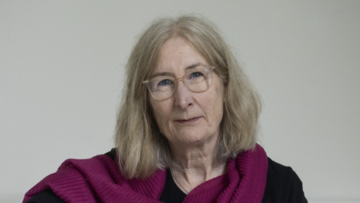
Professor Lyndal Roper, Emeritus Regius Professor of History at Oxford University, has been announced as the winner of the prestigious Holberg Prize for 2026.
Established by the Norwegian Parliament in 2003, the Holberg Prize is one of the largest annual international research prizes awarded for outstanding contributions to research in the humanities, social science, law or theology. Professor Roper will receive the award of NOK 6,000,000 (approx. £466,000) during a ceremony at the University of Bergen on 4 June.
Professor Roper is internationally recognized as one of the leading scholars of early modern European history. Her pioneering studies have reshaped understandings of both witch persecutions, the German Peasants’ War (1524–1525), and the life and thought of Martin Luther, illuminating how gender, the body, psyche and power operated in social and religious conflicts of the sixteenth century. Professor Roper’s work is widely renowned for its methodological innovativeness and capacity to cut across disciplinary boundaries.
Professor Roper said: “Over the course of my career, I’ve been trying to do history from below, that is, I wanted a history that would include the voices of ordinary people, of all kinds, colours and classes, and of women in particular. I wanted new historical narratives that were not about great men and giant events.
“Here I think my experience of being a mother made me realise how important what can’t be put into words is, and how communication doesn’t always need language, and I wanted gender to be front and centre of the kind of history we write. I wanted to bring people’s bodily experiences into history, and I wanted to think about people’s unconscious motivations too.”
Sigrun Aasland, Norway’s Minister of Research and Higher Education, said: “On behalf of the Norwegian Government, I would like to congratulate Professor Lyndal Roper on receiving the 2026 Holberg Prize. Her research offers new perspectives on European history and shows how ideas and beliefs from the past continue to shape us today. Roper’s work demonstrates why the humanities are essential for understanding the society we live in.”
Professor Dan Grimley, Head of the Humanities Division at the University of Oxford, said: “I am delighted that our Emeritus Regius Chair of History, Professor Lyndal Roper, has been awarded the prestigious Holberg Prize. The Prize is awarded to someone who has made a 'decisive influence on international research', and I cannot imagine a more deserving recipient than Professor Roper. Her research and publications have made a major contribution to our understanding of Martin Luther; the history of witchcraft; 16th-century German art; gender history; and more. Students and early career researchers in our History Faculty have benefited from her teaching and support over the years, and we are thrilled by the recognition that this award bestows.”
Professor Roper also reflected on the prize’s recognition of the value of the humanities, saying: “I think that the study of the humanities is crucial, and now more than ever in the age of AI. Above all the study of the humanities makes you interrogate the relationship between evidence and argument. If we don’t have this skill, we can’t critically question the answers AI seems to produce. We need people who can think critically, philosophers and thinkers who can point out logical flaws, who can see how far the evidence does support a claim, or how our conceptualisations shape our thinking, who can ask the meta questions.”
Professor Roper was the first woman, and the first Australian, appointed to the Regius Chair of History at the University of Oxford, a position she has held since 2011. She has held a professorship at Royal Holloway, University of London and has also taught at King’s College London, where she earned her PhD in 1985. Professor Roper co-founded the Bedford Centre for the History of Women and Gender in 1999. She is a Fellow of the British Academy, a Fellow of the Australian Academy of the Humanities, and a Fellow of the Berlin‑Brandenburg Academy of Sciences and Humanities. She was awarded the Gerda Henkel Prize for lifetime achievement in history in 2016.
Photo credit: John Cairns

