

Article Review: Skinner's Hobbes and the Person of the State
an important part of Hobbes’s political theory which comes to bear on modern efforts to navigate through the uncertain political environment: his concept of the state as an ‘artificial person’

Rohan Shah is a second year undergraduate studying History at Lady Margaret Hall.
Summary
I resurrect a seminal article written over two decades ago by Quentin Skinner, the titan of modern intellectual history and the world’s leading scholar on Thomas Hobbes, in which an important intervention is made in contemporary understanding of Hobbes’s concept of the state. Much like most of Skinner’s work, this article stands the test of time, and not only remains crucial for anyone attempting to grasp the intricate conceptual framework underpinning Hobbes’s political theory but also bears much weight on modern political debates.
Skinner's Hobbes and then Person of the State
The reckless behaviour of some of the most powerful world leaders in recent times has created a geopolitical maelstrom swallowing the confidence and authority of earnest citizens. Cracks begin to appear in the great democratic edifices of Western nations; and people don’t really know what to do about it. The insidious totalitarianism of the past century continues to linger in their minds. Perhaps the last hands they may expect to wrench them away from the edge of political frenzy, therefore, are that of Thomas Hobbes (1588-1679), the architect of the most formidable defence of absolute rule in the history of political thought: Leviathan (1651). Yet the world’s foremost scholar of Hobbes, and the progenitor of the modern history of ideas, Quentin Skinner, rescues Leviathan from its historical incarnation as an apologia for totalitarianism and sheds light on an important part of Hobbes’s political theory which comes to bear on modern efforts to navigate through the uncertain political environment: his concept of the state as an ‘artificial person’.[1] Skinner achieves this in his seminal article ‘Hobbes and the Purely Artificial Person of the State’ (1999), which grounds an analysis of Hobbes’s theory of the state in the methodological framework of intellectual history established by the “Cambridge School” of the 1960s in general, and by Skinner’s revolutionary essay ‘Meaning and Understanding in the History of Ideas’ (1969) in particular. The essence of this framework, derived from important contemporary enquiries in the philosophy of language, is the firm anchoring of texts within the context of a wider discourse with which the author was involved as a means of recovering the particular intervention he was making with his text, the latter being understood as a “speech-act”. Thus Skinner arrives at his exegetical conclusion on Hobbes’s claims about the person of the state by reading Leviathan as a largely polemical tract in dialogue with the parliamentarian theorists in mid seventeenth-century England. Although his insights in 1999 have since been subject to intense scrutiny, and have been partially revised by Skinner himself, they nevertheless represent important strides made in Hobbes scholarship, a masterpiece of intellectual history in practice, and a historical illumination of the concept of the state which, nearly three decades later, bears much weight in comprehending the politics of today.
I The Person of the State: Representation and Authorisation
It is in Hobbes’s claim that the state is a person that the nucleus of his entire civil philosophy and political thought is located:
‘For by art is created that great LEVIATHAN called a COMMON-WEALTH, OR STATE, (in latine CIVITAS) which is but an Artificiall Man […]; and in which, the Soveraignty is an Artificiall Soul […]’[2]
What type of person the state is Hobbes does not make explicit; yet he does supply an entire chapter in Leviathan elaborating a typology of persons, in Chapter XVI: ‘Of Persons, Authors, and things Personated’. This pivotal chapter, which contains Hobbes’s exposition of the notion of representation and of attributed action, forms the primary object of Skinner’s analysis in his 1999 article as it sets out the elaborate conceptual apparatus of Hobbes’s theory of the state, enabling Skinner to arrive at a convincing answer to the puzzle of the personhood of Hobbes’s state: that it is ‘a purely artificial person’.[3] His starting-point was the beginning of Chapter XVI, where Hobbes reveals his definition of a “person”:
‘A PERSON, is he, whose words or actions are considered, either as his own, or as representing the words or actions of an other man, or of any other thing to whom they are attributed, whether Truly or by Fiction. When they are considered as his owne, then he is called a Naturall Person: And when they are considered as representing the words and actions of an other, then he is a Feigned or Artificiall person.’[4]
Skinner’s first step is to elucidate Hobbes’s theory of attributed action as set out in Leviathan, interrogating the first half of the passage quoted above. He argues firstly that a person, according to Hobbes, is any individual who could be represented in their words and behaviour: much like a performer in Shakespeare’s A Midsummer Night’s Dream has to bear the ‘person of Moonshine’ with ‘a bush of thorns and a lantern’ in order to properly convey the moonlight encounter of Pyramus and Thisbe,[5] in Hobbes’s political theory ‘a Person, is the same that an Actor is, both on the Stage and in common Conversation’.[6] What counts as valid representation is based, Skinner argues, on whether or not the representative (the actor) has been authorised to carry out the action on the author’s behalf. And it is the author who can authorise an actor to personate themselves, since he ‘owneth his words and actions’ in a state of ‘Dominion’.[7] This process of authorisation is carried out, says Hobbes, via the granting, on the part of the author – the authorising agent – of a ‘Commission, or License from him whose right it is’ (i.e. the author), which amounts to a transfer of the ‘Right of doing any act’ that binds the actor and the author in a ‘Covenant by authority’.[8] Importantly, this act of covenanting with each other confers two antithetical duties on the author which he is obliged to follow insofar as he wishes to be represented: he has a ’duty to take responsibility for his actions’ and their consequences, since he is the owner of them;[9] yet at the same time he cannot interfere with his representative’s actions since ‘To lay downe a mans Right to any thing, is to devest himself of the Liberty, of hindring another of the benefit of his own Right to the same’.[10] An action can be legitimately attributed to a person, therefore, only insofar as it was carried out by an authorised representative.
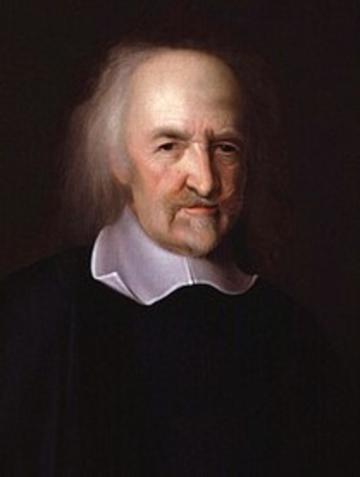
Figure 1: Portrait of Thomas Hobbes, c.1669-70
Having clarified Hobbes’s concepts of authorisation and representation, Skinner moves onto the latter half of the opening passage to Chapter XVI which makes a distinction between “natural” persons and “feigned” or “artificial” persons. The former is characterised by their ability to represent themselves, since they own their individual words and actions, and their ability to authorise other persons to represent their actions. Natural persons, by implication, retain their natural autonomy and personality outside the sphere of influence of any form of representation. It follows, Skinner argues, that this typology of person is not a relatively encompassing one, for ‘Children, Fooles, and Mad-men that have no use of Reason […] can be no Authors (during that time) of any action done by them’.[11] The latter, by contrast, constitutes an entity which is represented as opposed to being the representative. Hobbes’s artificial person can be further dissected, Skinner argues, into the categories of those who are artificial and natural persons (i.e. capable of acting on their own behalf); and “purely artificial persons” – the fulcrum of Hobbes’s theory of state – who cannot perform actions in the manner of natural persons and ‘cannot be Authors, not therefore give Authority to their Actors’;[12] but can only perform actions through a representative authorised by another entity whereby the actions of the representative can be legitimately attributed to the artificial person. What such entity, according to Hobbes, possesses the capability to authorise the representative of this purely artificial person? Skinner contends that they must occupy a position of superiority or dominion to the artificial person, which could manifest in a situation whereby the ‘first party brings the third into existence’ – much like the ‘right of Dominion over the [infant] Child dependeth on her [Mother’s] will, and is consequently hers’ in the state of nature.[13]
This class of person, the purely artificial persons, includes personified inanimate objects like ‘a Church, a Hospital, a Bridge’, and the state. Thus it is here that we arrive at Hobbes’s innovative conception of the state, which Skinner brings forth in a synthesis of the analysis conducted thus far of the theory of attributed action and the distinction between natural and artificial persons in Leviathan. In order to escape the hypothetical state of nature – that ungoverned condition of living in endless competition with one another, fostering an uncertain climate which reduces the means of survival to a minimum, and which leaves you with nothing but your natural right to secure self-preservation and a life which is ‘solitary, poore, nasty, brutish, and short’ - Hobbes offers a contractual escape, entailing a covenant with each other to initiate a long-term surrender of your rights (save your natural right to self-preservation) to a sovereign ruler. Skinner articulates this in the language of Hobbes’s theory of representation and of typologies of persons: the ‘multitude living in a condition of mere nature can manage, as [Hobbes] puts it, to “institute” a legitimate commonwealth or state…only…by transforming themselves into an artificial person by way of authorising some natural person or persons to represent them’.[14] This transformation occurs when each individual agrees ‘to conferre all their power and strength upon one Man, or upon one Assembly of men, that may reduce their Wills, by plurality of voices, unto one Will’.[15] This ‘one Man’ or ‘Assembly of men’ who is appointed to ‘beare their Person’ – to act as their representative – and who enables them to act as one will and voice, is the natural person of the sovereign: ‘This is the Generation of that great LEVIATHAN […] the Person representative of all and every one of the Multitude’.[16] And the artificial person brought into existence by this transformation, and whose representative is the sovereign, is the state or commonwealth: ‘the Multitude so united in one Person, is called a COMMON-WEALTH, in latine CIVITAS’.[17]
It follows from Hobbes’s theory of attributed action that the actions of the sovereign are really the actions of the artificial person of the state, i.e. the multitude of people. It also follows from Hobbes’s conception of representation that the actions of the artificial person of the state can only be authorised by the multitude of people, who possess both the right to undertake the same actions performed by the state and a superior position in relation to the state since it is only their union which engenders its existence at all. Thus in a dynamic exegetical excavation of Hobbes’s contentions about the person of the state, which are primarily located in Chapter XVI of Leviathan – the most illuminating chapter of the text on his theory of state – Skinner uncovers the conceptual intricacies of Hobbes’s theories of representation and authorisation to successfully clarify the meaning and force behind his claim that the state can be defined as ‘One Person’, and an ‘Artificiall Man’.[18]

Figure 2: Photograph of Martin Hollis, Alchetron, 2024
II The Inaugural Martin Hollis Lecture
It should be noted that the trajectory of Skinner’s analysis, taking the opening passage of Chapter XVI as its point of departure, acquired a distinctly philosophical bent. Hobbes, it is true, was drawn into the realms of science and philosophy before he turned to political theory. Particularly invigorating for Hobbes was the time he spent with Galileo, as well as with the intellectual circle of Marin Mersenne, during his European travels in the 1630s. This exposed him to the “new science” of the age, and offered an attractive alternative to the old scholastic philosophy founded on Aristotelian metaphysics which had been taught to him as part of the humanist curriculum at Oxford, with which he had become increasingly disillusioned. These experiences stimulated Hobbes to embark on a grand philosophical project involving the composition of a trilogy of Latin treatises based on his inspired conviction that the world consisted of bodies in motion colliding with one another. Hobbes’s Leviathan, which was composed in less than eighteen months, can be viewed as an impulsive and temporary diversion from this project necessitated by political escalations in mid-century England triggered by the establishment of the Commonwealth: ‘an other taske in hand’ demanded his attention, Hobbes wrote to a friend in early 1650, namely to finish writing a book of ‘Politiques, in English’.[19] The timing of Leviathan thus ensured that Hobbes’s political thought remained inseparable from his materialist philosophy. Indeed, Hobbes begins Leviathan by declaring that ‘life is but a motion of Limbs’; and the entirety of part I of the text contains an elaboration of his corporeal metaphysics, the culmination of which is none other than the crucial Chapter XVI.
But reading this chapter in light of Hobbes’s materialist philosophy, which reveals a theory of personation advanced by Hobbes that constitutes a broader study of “social ontology”, is a line of interpretation along which Skinner refuses to peruse.[20] He instead pays homage to Martin Hollis (1938-1998), the great twentieth-century philosopher of mind, for whose commemoration the Inaugural Martin Hollis Memorial Lecture of 1999 is delivered by Skinner on ‘Hobbes and the Purely Artificial Person of the State’. As Hollis was primarily concerned with persons and the rational basis for their behaviour, Skinner seeks to cast Hobbes in a similar light: ‘the essence of [Hobbes’s] theory is that the state is the name of a particular type of person. Furthermore, the state is the person whose reasons and actions we have the greatest cause to worry about, since the state is the holder of sovereign power over us all’.[21] Rather than Hobbes’s ‘person of the state’ deriving from his materialist ontology, then, Skinner pursues the path of moral philosophy and assimilates to Hobbes a moral theory of persons. This can
be seen most vividly in his analysis of Hobbes’s concepts of representation and authorisation, arguing that Hobbes’s ‘distinctive and highly influential approach to the question of how it is possible for a state – or any other abstraction or collectivity – to perform actions and take responsibility for the consequences comes to depend on making sense of what he describes as the class of attributed actions’.[22] The language deployed by Skinner here is telling: it is largely drawn from the lexicon of modern philosophers of mind (‘abstraction’, ‘agent’, ‘class of attributed action’), nowhere invoked by Hobbes – and would, indeed, have an odd ring in the ear of any seventeenth-century political thinker. The memory of Hollis remained etched in Skinner’s mind, and permeated his investigation into Hobbes’s theory of the state.
III Contextualising Hobbes: Skinner and Intellectual History
Having fulfilled his exegetical aim to explicate Hobbes’s particular claims about the person of the state, Skinner shifts his focus towards the end of his article to a more historical issue, seeking an answer to a question posed at the outset: ‘What drove him [Hobbes] in this direction?’ Skinner asks the most fundamental question of any sound historical analysis: why did this come about? The answer that he formulated is a remarkable testament to the shrewdness and originality of his historical enquiry into Thomas Hobbes.
Skinner points us to “The Epistle Dedicatory” of Leviathan, where he believes Hobbes made an explicit identification of the political opponents he intended the text to serve as an answer and a challenge to. In this preface, which dedicates the work to Francis Godolphin, the brother of Hobbes’s close friend Sidney Godolphin, Hobbes seems to acknowledge the volatile political atmosphere which would inevitably form the most immediate point of intellectual contact between Hobbes’s ideas in Leviathan and the arguments advanced by other contemporary political theorists. ‘[…] in a way beset with those that contend’, he remarks, ‘on one side for too great Liberty, and on the other side for too much Authority, ‘tis hard to passe between the points of both unwounded’.[23] The latter group, Skinner argues, are evidently the divine right theorists who sought to vindicate the divinely ordained English crown amidst attacks on it mounted by parliamentary supporters in the early 1640s. Thus Hobbes’s particular conception of the state as an artificial person served, on one level, to challenge divine right theory; it was the consensual union of the human multitude which brought the state into existence and legitimised its authority, rather than the providential hand of God bestowing political power upon rulers.[24]

Figure 3: Professor Quentin R.D. Skinner, 2011
The former camp, however, represented a much more formidable opponent in Hobbes’s eyes, and one which more urgently required a fierce challenge. These were the parliamentarian propagandists of the 1640s, who utilised consensual arguments often derived from the arguments of the monarchomachs to launch an attack on the English crown. Skinner shrewdly demonstrates how these writers acted as political straw-men against whom Hobbes carefully constructed a critique that was founded upon a particular rhetorical strategy, which involved the endorsement of the fundamental structure of the parliamentarian arguments but a simultaneous rejection of the radical conclusions they arrived at as a result. Thus, while Hobbes agrees with Henry Parker in his belief, articulated in his Observations (1642), that common consent underpinned the legitimacy of lawful authority, he parts company with Parker by arguing that, on the basis of his conceptions of representation and authorisation, ‘the idea of consent as the only source of lawful government is fully compatible with a strong defence of absolute sovereignty and the duty of non-resistance’.[25] This is because the act of covenanting with each other to institute the sovereign and effect a transformation into the artificial person of the state confers, as we may recall, those two antithetical obligations on the members of the multitude – the authors of the actions of their sovereign and state – towards their representatives; namely, the ‘duty to own their actions’ and the ‘duty of non-interference’.[26] In the latter case, Hobbes directly refutes Parker’s argument that the people ‘retain the right to withdraw their consent and set down the authority they originally set up’ as the people in fact surrendered any right to intervene with the sovereign, who has the upmost discretion in deciding the best course of action to secure the ‘safety and contentment’ of the people. In the case of the former, this demonstrates that any opposition shown to the sovereign and its conduct will not only be invalid but will also present a paradox: ‘[…] he that complaineth of injury from his Soveraigne, complaineth of that whereof he himself is Author; and therefore ought not to accuse any man but himselfe’.[27] Thus Skinner convincingly declares that Hobbes’s theory of state and his conceptions of representation and authorisation in particular, and Leviathan as a text in general, should be attributed a certain polemical force, and should necessarily be read as constitutive of a partisan intervention into contemporary political discourse.
This sensitivity to the historical context in which Hobbes formulated his ideas, and the reading of these ideas as the product of a Hobbes in dialogue with his contemporaries, represents a particular approach to intellectual history and the history of political thought which Skinner himself pioneered at Cambridge in the 1960s, along with some of his contemporaries. In the 1950s and early 1960s, the study of intellectual history at Cambridge suffered a lowly reputation as the curriculum was largely dominated by traditional political history. There was additionally a rising tide of Marxist approaches to history in the immediate postwar decades, influenced by the works of Crawford B. Macpherson (1962) as well as Fernand Braudel and the Annales school in France, attitudes which tended to assume that historical change was always driven by fundamentally economic forces, and that social and political ideas were mere rationalisations of personal interests and thus have no agency in social and historical change.[28] Unsurprisingly, then, the history of ideas was relegated to the margins of historical study. Moreover, the study of intellectual history and of historical texts in political thought still followed its conventional format, in typical Straussian fashion, of focusing on a succession of supposedly “great” texts and their interactions with each other, facilitating the belief that philosophers in history have concerned themselves over a uniform set of issues and questions that are transmitted across time and space indefinitely. It was these two factors shaping the intellectual climate at Cambridge when Skinner was studying there which stimulated a reaction in 1969, when in his revolutionary essay “Meaning and Understanding in the Ideas of History” he condemned the “perennial” attitudes to the history of thought and formulated a trenchant exposition of a new methodological approach to intellectual history: contextualism.
Having been introduced to Robin G. Collingwood (1889-1943) and his seminal ‘An Essay on Metaphysics’ (1940) and An Autobiography (1939) by his school teacher, John Eyre, Skinner became entranced by Collingwood’s logic of ‘question and answer’ and his suggestion that the history of political thought was ‘not the history of different answers to one and the same question, but the history of a problem more or less constantly changing, whose solution was changing with it’.[29] Skinner’s attack in “Meaning and Understanding” on the perennial approaches to analysing historical texts was, therefore, largely born out of the influence of Collingwood’s ideas. The inspiration for the contextualising approach to texts advocated by Skinner in his 1969 essay primarily lay with the recent advancements made in the philosophy of language by John L. Austin and Ludwig Wittgenstein. The latter’s argument in his “Philosophical Investigations” (published posthumously in 1953) that language forms a kind of ‘game’ with specific rules shaping the use of such language; and the former’s insight in his “How to Do Things with Words” (1962) that language when employed by an author with words represents a particular action (‘illocutionary’ dimension to words) in addition to the merely literal meaning of the utterance, led Skinner to argue in 1969 that in order to understand texts properly, it is necessary to comprehend the precise historical circumstances in which the ‘speech-act’ was made to therefore uncover the intentionality of the author and thus what he was doing when making an utterance. ‘The understanding of texts’, Skinner declares, ‘presupposes the grasp both of what they were intended to mean, and how this meaning was intended to be taken. It follows from this that to understand a text must be to understand both the intention to be understood, and the intention that this intention be understood, which the text itself as an intended act of communication must at least have embodied’.[30]
Skinner’s methodological insights amounted to a revolution in intellectual history, spearheading the so-called “Cambridge School” which included contemporaries of Skinner who were attempting to do broadly similar things to Skinner to fundamentally alter the prevailing approaches and attitudes to historical texts. His article on Hobbes’s person of the state, three decades after the publication of his important methodological essay, exemplifies this method in practice. By firmly anchoring Hobbes within his wider historical and intellectual context, Skinner was able to recover the particular ideological interventions made with his Leviathan to construct a compelling synthesis of insightful readings of the conceptual particularities of his political thought, rooted ultimately in a sensibility of Hobbes and of political thinkers in general as active agents in history, rather than insignificant mouthpieces in a narrow study of the history of ideas.
IV Conclusion
It is due to this central conviction among intellectual historians, that ideas have the power to shape the trajectory of the relentless march of history, that the political thought of Thomas Hobbes still carries relevance today. A resurrection of Skinner’s insights into Hobbes’s conception of the state, underpinned by his conceptual framework of representation and authorisation, may serve to invigorate fresh considerations of the nature of the relationship between ruler and ruled, sovereign and people, by reminding us of the provenance of both our legitimacy as the public body of citizens and the legitimacy of government and of governmental action. Drawing a distinction between state and government, proceeding from a Hobbesian conceptualisation of the state as an artificial person, may permit an enlightened understanding of the sinews of power and thus enable us to take a step closer to stabilising the increasingly shaky foundations of modern democracies.
References
[1] Q.R.D. Skinner, ‘Hobbes and the Purely Artificial Person of the State’, Journal of Political Philosophy, 7 (1999), pp. 1-29
[2] T. Hobbes, Leviathan, ed. N. Malcolm (Oxford, 2024), p. 8
[3] Q.R.D. Skinner, ‘Hobbes and the Purely Artificial Person of the State’, Journal of Political Philosophy, 7 (1999), pp. 1-29
[4] T. Hobbes, Leviathan, ed. N. Malcolm (Oxford, 2024), p. 132
[5] W. Shakespeare, The Complete Works, ed. S. Wells and G. Taylors (Oxford, 1988), p. 320
[6] T. Hobbes, Leviathan, ed. N. Malcolm (Oxford, 2024), p. 132
[7] Ibid., p. 132
[8] T. Hobbes, Leviathan, ed. N. Malcolm (Oxford, 2024), p. 132
[9] Q.R.D. Skinner, ‘Hobbes and the Purely Artificial Person of the State’, Journal of Political Philosophy, 7 (1999), p. 9
[10] T. Hobbes, Leviathan, ed. N. Malcolm (Oxford, 2024), p. 107
[11] Q.R.D. Skinner, ‘Hobbes and the Purely Artificial Person of the State’, Journal of Political Philosophy, 7 (1999), p. 134
[12] T. Hobbes, Leviathan, ed. N. Malcolm (Oxford, 2024), pp. 133-4
[13] Ibid., p. 166
[14] Q.R.D. Skinner, ‘Hobbes and the Purely Artificial Person of the State’, Journal of Political Philosophy, 7 (1999), p. 18
[15] T. Hobbes, Leviathan, ed. N. Malcolm (Oxford, 2024), p. 135
[16] Ibid., p. 141, 153
[17] Ibid., p. 141
[18] Ibid., p. 8, 141
[19] T. Hobbes, Leviathan, ed. N. Malcolm (Oxford, 2024), p. xii
[20] P. Springborg, ‘Quentin Skinner and Hobbes’s Artificial Person of the State Redux: From Humanism to Hobbes: Studies in Rhetoric and Politics, by Quentin Skinner, Cambridge, Cambridge University Press, 1/31/2018 (paperback), ISBN: 9781107569362’, Global Intellectual History, 6/5 (Abingdon, 2021), p. 736
[21] Q.R.D. Skinner, ‘Hobbes and the Purely Artificial Person of the State’, Journal of Political Philosophy, 7 (1999), p. 2
[22] Q.R.D. Skinner, ‘Hobbes and the Purely Artificial Person of the State’, Journal of Political Philosophy, 7 (1999), p. 3
[23] T. Hobbes, Leviathan, ed. N. Malcolm (Oxford, 2024), p. 3
[24] Q.R.D. Skinner, ‘Hobbes and the Purely Artificial Person of the State’, Journal of Political Philosophy, 7 (1999), p. 24
[25] Ibid., p. 25
[26] Q.R.D. Skinner, ‘Hobbes and the Purely Artificial Person of the State’, Journal of Political Philosophy, 7 (1999), p. 26
[27] T. Hobbes, Leviathan, ed. N. Malcolm (Oxford, 2024), p. 144
[28] Hansong Li, ‘Ideas in Context: Conversation with Quentin Skinner’, Chicago Journal of History, 7 (2016), p. 126
[29] R.G. Collingwood, An Autobiography (Oxford, 1939), p. 62
[30] Q.R.D. Skinner, ‘Meaning and Understanding in the History of Ideas’, History and Theory, 8/1 (1969), p. 48
Bibliography
A. Brett, ‘What is Intellectual History Now?’, in D. Cannadine (ed.), What is History Now? (Palgrave, 2002)
A. Ryan, ‘Hobbes’s political philosophy’, in T. Sorrell (ed.), The Cambridge Companion to Hobbes (Cambridge, 1996)
Hansong Li, ‘Ideas in Context: Conversation with Quentin Skinner’, Chicago Journal of History, 7 (2016)
P. Springborg, ‘Quentin Skinner and Hobbes’s Artificial Person of the State Redux: From Humanism to Hobbes: Studies in Rhetoric and Politics, by Quentin Skinner, Cambridge, Cambridge University Press, 1/31/2018 (paperback), ISBN: 9781107569362’, Global Intellectual History, 6/5 (Abingdon, 2021)
Q.R.D. Skinner, ‘Hobbes and the Concept of the State’, in Q.R.D. Skinner (ed.), From Humanism to Hobbes: Studies in Rhetoric and Politics (Cambridge, 2018)
Q.R.D. Skinner, Hobbes and Republican liberty (2008)
Q.R.D. Skinner, ‘Hobbes on Representation’, European journal of philosophy, 13/2 (2005), pp. 155-84
Q.R.D. Skinner, ‘Meaning and Understanding in the History of Ideas’, History and Theory, 8/1 (1969)
R.G. Collingwood, An Autobiography (Oxford, 1939)
T. Hobbes, Leviathan, ed. N. Malcolm (Oxford, 2024)
W. Shakespeare, The Complete Works, ed. S. Wells and G. Taylors (Oxford, 1988)
https://artuk.org/discover/artworks/professor-quentin-r-d-skinner-229913