Dr Daniel McDonald
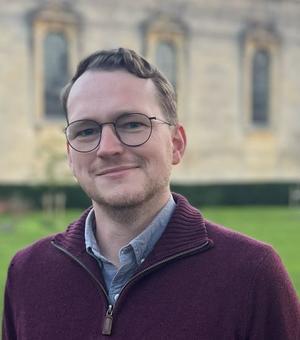
Fulford Junior Research Fellow
Somerville College
daniel.mcdonald@history.ox.ac.uk
I am a historian of modern Latin America and global Catholicism. My research centers the dynamic interplay between grassroots mobilizations and transnational Catholic networks in the Americas during the Cold War.
My first book, Peripheral Citizenship: Popular Movements and the Progressive Catholic Church in Urban Brazil, was published by the University of California Press in August 2026. My work has also appeared in the American Historical Review, the Hispanic American Historical Review, The Americas, and the Journal of Urban History.
Concurrently with my Fulford JRF at Somerville College, I am a postdoctoral research fellow for the "Global Pontificate of Pius XII: Catholicism in a Divided World" network based at the German Historical Institute in Rome. Before Oxford, I held fellowships at Harvard University and the University of Rochester. I received my PhD in History from Brown University.
Research Interests
- Modern Latin American History
- Global History of Catholicism
- Social & Lay Movements
- Catholic Internationalism
- Urban History
- The Cold War
My first book, Peripheral Citizenship: Popular Movements and the Progressive Catholic Church in Urban Brazil (California, 2026), rewrites the history of citizenship in Latin America by demonstrating that the urban periphery became a laboratory for new visions of rights, democracy, and the Catholic Church itself. Connecting the global and local, Peripheral Citizenship traces how rural migrants and clergy engaged a changing global Church and unequal urbanization in São Paulo’s periphery across Brazil’s military dictatorship (1964-1985) and post-1985 democratic transition. The book uncovers for the first time how these actors constructed an emancipatory vision of citizenship from the peripheries of the city, the nation, and the Church, making São Paulo a key reference for both proponents of liberation theology and its critics.
At Oxford, I have developed two lines of research bridging modern Latin American and global Catholic history. The first examines the globalization of the Latin American Church during the Cold War through the deployment of personnel from Europe, North America, and the Pacific. This project traces the global circulation of novel pastoral and spiritual practices, ideas, and people across the transnational networks convened by this deployment. This project draws on extensive research in Vatican archives combined with work in over twenty archives across the Americas, Europe, and the Pacific. Alongside the “Global Pontificate of Pius XII” project, support has come from the American Philosophical Society, British Academy/Leverhulme Trust, and the Oxford University Press Fell Fund.
The second reexamines Catholic internationalism "from the south" through a transnational history of post-WWII Latin American Catholic Action. Focused on the urban and rural youth workers’ wings (JOC and JAC), this research centers how these activists constructed new understandings of Catholic internationalism in conversation with colleagues elsewhere in the global South and in Europe.
This research has also supported the development of articles on Cold War Vatican diplomacy in the Americas, the Papal Volunteers for Latin America, Catholic Pan-Americanism, and global Catholic internationalist solidarity campaigns, among other topics. Likewise, I am currently co-editing a volume on transnational Catholic networks in Cold War Latin America tentatively titled Revolutions in Faith: Catholicism and the Global Cold War in Latin America.
Finally, I have developed a broad portfolio of digital and public projects. Most recently, I was a researcher for the Netflix documentary Apocalypse in the Tropics (2025) by Oscar-nominated director Petra Costa on evangelical influence on far-right politics in contemporary Brazil. I am a co-founder and coordinating committee member for the Instituto Favelas (Favelas Institute), a network of favela associations and allied academics that supports community-based archiving and digitization projects. I have written on a similar past collaborative archiving project in the American Historical Review.
Publications
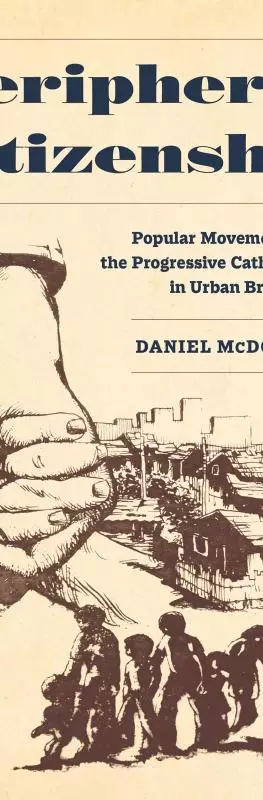
Peripheral Citizenship:
Popular Movements and the Progressive Catholic Church
(University of California Press, 2026)
How is citizenship constructed from the margins? Peripheral Citizenship examines this question by placing the urban outskirts of South America’s most populous city, São Paulo, amid processes that transformed twentieth-century Latin America: rural-urban migration and rapid urbanization, the advent of liberation theology, and the rise and fall of military dictatorships. Drawing on oral histories and grassroots archives, Daniel McDonald traces the emergence of a remarkable bottom-up rights campaign through the lives of rural migrants, progressive clergy, and allied activists in São Paulo during Brazil’s military dictatorship (1964–1985) and the subsequent democratic transition. He unveils how popular movements, aligned with the progressive Catholic Church and leftist political parties, forged a vision of citizenship that combined rights grounded in everyday life with innovative forms of participatory democracy. In the process, they reshaped the city, the Church, and the nation from the periphery.
Masters Students
I am open to supervising MSt students in Latin American and global history broadly, especially those working on topics related to the history of Catholicism and Christianity, urban history, social history, and the Cold War.
In the Media
Netflix (2025) - Apocalypse in the Tropics (2025) directed Petra Costa - Researcher and consultant for the film 'Apocalypse in the Tropics'
9 June 2022 - Brazil’s Vaccinated Democracy: The Life and Times of Zé Gotinha - ReVista: Harvard Review of Latin America
6 December 2021 - Democracy can be rebuilt after dictatorship — if the people build it - Washington Post