The Oxford Historian (2025-26)
Martin Conway discusses the changes and challenges that the faculty has had to face in the past 12 months.
We have moved! If you want to come back to Oxford to find the History Faculty (and you would be most welcome), our new home is in the imposing Schwarzman Building, behind Somerville College and the old Radcliffe Infirmary Building on Woodstock Road. This building is now the base for seven of the Humanities faculties, along with lecture theatres, a concert hall, a cinema, and a theatre, as well as a coffee bar and cafeteria. History is up on the second floor, looking inward into a large atrium, and outward across the familiar skyline of Oxford. After our former homes in the orientalist kitsch of the former Indian Institute, and the late-Victorian municipalism of the Old Boys School, the Schwarzman Building is a bit of a culture shock. It is the largest and most expensive building ever created in the UK for Humanities, and one funded in large part by private philanthropy. Vaguely evocative of an upmarket international hotel or a Dubai shopping mall, it cannot claim the same patina of historical resonance; but it has given us for the first time a building fit for our teaching and research activities. The IT works, the professional staff have properly equipped offices, and the teaching rooms provide spaces for seminars and classes. Above all, the range of libraries and research areas within the building give our community of graduate students and post-doctoral researchers a place where they can work and socialise. The building has been full – at times overly so – since it opened at the end of September, and the buzz of conversation gives it an indisputable energy.
But there is no point in having a new building unless you know what you want to do in it. And this Michaelmas Term has been, as always, a mixture of the familiar rituals of the arrival of new generations of students – graduate and undergraduate – and new events and initiatives which reflect the evolving character of the History Faculty. These included the inaugural lecture in November given by the Hillary Clinton Professor of Women’s History, Sarah Knott, as well as the launch in collaboration with Wadham College of the Koch Historical Centre, which for the first time gives us our own research centre, composed each year of twelve fellows from around the world working on a single theme across different periods and areas of History.
A major preoccupation for the Faculty this term has been how we should respond to the challenge of AI. Within a very few years, this has become a ubiquitous feature of academic life, enabling students to download a machine-written essay in a couple of minutes, or a summary of a book or article. This is easy to deplore, but impossible to prevent; and in response we have put in place new regulations regarding the submission of written work outside of a formal examination environment. But the real challenge is to learn how to turn these new tools to good effect (notably the opportunities it provides for data analysis), while also ensuring that students are not deskilled by becoming reliant on the bland texts that these tools generate. In all of this, our greatest ally is the students themselves, who are very conscious of the dangers of short cuts that destroy their originality, and who want to remain the authors of their own work. All of this requires education (of tutors, as much as of students), but we hope that we shall be able to integrate the new tools into the more familiar repertoires of scholarship and writing.
Alongside AI, our greatest preoccupation remains the funding of graduate study in History. Public funding of graduate work at the masters and doctoral levels in History has been decimated over recent years; and, working together with colleges, we have been creating a range of scholarships and grants to keep graduate students afloat. We have created a new structure of bursaries that we dispense to doctoral and many Masters students to contribute to their research costs, and are grateful to the many History alumni who have given generously to our graduate funding via www.campaign.ox.ac.uk/history
Through that fundraising, and our involvement in campaigns across the UK to protect university History departments from closures and downsizing, our central preoccupation must be to ensure that Oxford’s History Faculty remains a demonstration of the enduring value of a knowledge of the past. The buildings where we work may change, as may the technology we use. But History is a discipline that thrives on change, and it is by asking new questions about the past that we educate ourselves, those we teach, and the wider community.
Martin Conway
Chair of the History Faculty Board
Why would anybody go to a History lecture in the 21st century? In a world where electronic media – websites, podcasts, YouTube, blog posts, and Substacks – can provide us all with access to an infinity of resources without leaving our desks or beds, the anachronism of going to a hall to listen to a lecture seems astonishing. And yet the pattern of attendance at lectures of all forms in the History Faculty has shown very little change over recent years, and has recovered strongly since the enforced intermission of the pandemic, when many lectures were delivered on-line. We are no longer in the world of the 1950s and 1960s when, if the photographs of the time are to be believed, hundreds of students (largely male, often dressed in jackets and ties, as well as gowns) crammed into the Exam Schools to listen to A.J.P. Taylor and others deliver their thoughts on the evolution of British (in fact largely English) History. Since then, the History curriculum has become much more diverse, and so thankfully have the audiences; but the appeal of listening to lectures and a wide variety of more specialist seminar talks has endured. Partly this may be because lectures nowadays are much more engaging: the easy availability of the tools of PowerPoint, and video and audio clips means that lectures comprise much more than words. And of course, there are plenty of other reasons for attending lectures: the hope of a quick solution to the week’s essay question, a legitimate reason to meet friends, or simply the opportunity to be seen to be doing something more purposeful than reading a book, are all factors that prompt students to leave their rooms and the libraries to go to the Exam Schools and other venues across central Oxford.
But, more than that, there is something about the nature of History which draws people to lectures. The huge success in recent years of History festivals, and of podcasts, such as The Rest is History hosted by Tom Holland and Dominic Sandbrook (the latter an Oxford History product), shows an appetite among a public much broader than those who would define themselves as students of History for what is in effect a lecture-lite format, with the advantage that it can be consumed while travelling or doing the washing-up.
But the classic lecture format also retains its appeal. Hilary Term is when many of the Faculty’s principal lecture series take place, open to all members of the University, notably the Ford Lectures in British History, first delivered in 1897. This term’s lecturer, Peter Mandler (once Oxford, now Cambridge), has been giving a very well-attended series on ‘The Language of Social Science in Everyday Life’, tracing the ways in which the principal concepts of identity current in twentieth-century Britain, both individual and collective, are derived from the social sciences. The ways in which we think about ourselves – notably our contemporary categories of class, gender, ethnicity, sexuality, and generation – rest on categories conceived by social scientists. But how we consume those concepts, and use them with agency in our lives, is emphatically a historical subject.
Recordings of Peter’s lectures are available on-line, and they are well worth a listen. But, if you do so, you may well end up reflecting on how the appeal of lectures is not just about their content, but also about their intangible context: the opportunity they provide to be in the company of others, to sit still and listen to an argument, and watch the accompanying images, and then to walk away reflecting, no doubt sometimes critically, on what you have heard. That is how we do History in our heads, and will long continue to do so.
Chair of the History Faculty Board
Of Prizes and Cuts
Prizes can at times seem like a mixed blessing in contemporary academia. We take great pride in the awards won by our students, and are modestly pleased when one of the numerous league tables of universities declares that Oxford is the best university for History. But the multiplication of prizes which has occurred in recent years – some influenced by commercial agendas, and others by present-day preoccupations – can at times make it difficult to discern their real value.
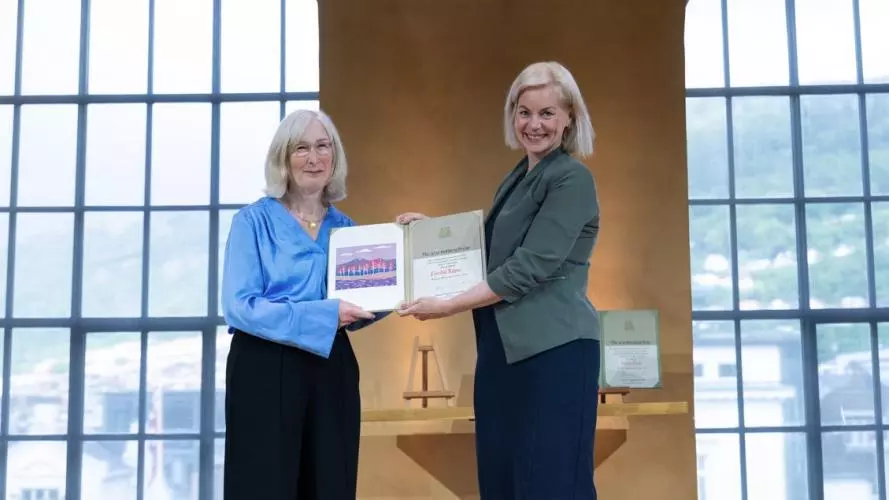
It was therefore with enormous pride that we learned in the spring that the recently retired Regius Professor, Lyndal Roper, had been awarded a prize of indisputable distinction: the Holberg Prize. This is a major prize awarded by an international committee funded by the Norwegian Government for fundamental research in the Humanities, Social Sciences, Law and Theology; and is intended to compensate for the absence of Nobel Prizes in these disciplines. Lyndal received the award in Bergen earlier this month, and you can read more about the splendid ceremony, and watch Lyndal’s lecture here:
https://holbergprize.org/events-and-productions/the-2026-holberg-lectur…
Lyndal is an immensely deserving recipient of this Prize. During her period as the Regius Professor, and before that as a tutor at Balliol, and as a Junior Research Fellow at Merton, Lyndal has been the pioneer of a new way of writing about the history of early modern Europe that combines in a highly skilful way the history of gender, of religion, and of cultural norms, all informed by her distinctive application of psychological methods. Her books on, among others, the early modern witch craze, Martin Luther, and most recently the German Peasants War are not only major works of scholarship but also talk to issues of our time; and it is gratifying that the Holberg Prize jury has recognised her outstanding achievement as a member of our Faculty.
As Lyndal would be quick to say, History is not an individual discipline, and her work is just one example of the collective work of members of the historical community in Oxford and elsewhere. Over the last year, the Faculty has made a number of new and replacement appointments across different areas of historical research, ranging from early medieval Europe to South Asian History, and a new Professorship in post-1989 Contemporary European History. We have been able to make these appointments because of the strong demand – especially at the graduate level – for the study of History, the success of our colleagues in winning external research grants, as well as our collaboration with colleges in fundraising for the subject, especially from our alumni.
But the current strength of the Faculty stands in stark contrast to the cuts being implemented in many History departments in universities across the UK. Closures of departments, institutional mergers, redundancies, short-term contracts, and early retirement programmes, have gathered pace over the last year across many universities – most recently at Essex, Hertfordshire, Nottingham, and Exeter. These are not malicious acts of managerialist vandalism, but the ineluctable consequence of three forces: the quasi-freezing of the fees provided by the government for undergraduate degrees; the vertiginous fall in the number of European and global students, as a consequence of departure from the EU and changes in UK visa regulations; and the massive reduction in public funding of graduate study and research in History.
As the Royal Historical Society has made clear in a number of forthright public statements (see royalhistsoc.org), this combination of pressures is rapidly eroding the study and practice of History in the UK. The hollowing out of undergraduate degree programmes frustrates the demand of students to study a diverse range of historical periods and subjects; the collapse in state funding for graduate work cuts off the pipeline of new scholars entering the profession; and the reductions in public funding for research in History and other Humanities subjects imperils the collaboration of historians with a range of public and private cultural organisations who do so much to communicate historical knowledge to wider audiences. History is a subject with benefits much wider than the knowledge it generates, and the questions it asks. It remains one of the most strongly demanded subjects at the undergraduate level, and students of History are to be found in a wide range of professions and other forms of employment. Above all, an understanding of History provides more than ever the perspectives and skills to make sense of our rapidly changing world.
For all of these reasons, the History Faculty emphatically supports the campaigns to protect History as a discipline, a profession, and a subject which really matters. Let’s hope that together we can make that case.
Professor Martin Conway
Chair of the History Faculty Board
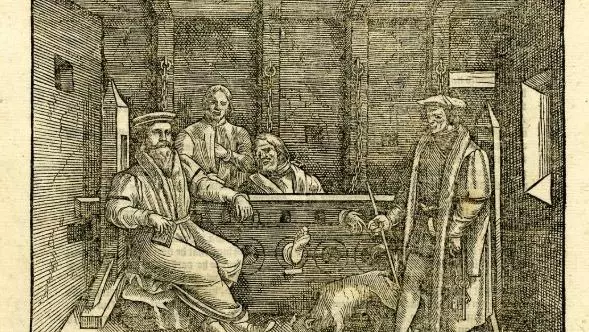
Bloodsuckers of the Commonwealth: Monopolies, petitioning and the public sphere in early modern England




Cerne Abbas: Secrets Beneath The Giant
Dr Helen Gittos has recently worked with the TV show Time Team to explain the mysteries behind the Cerne Abbas giant. This follows on from her research last year.




The Oxford Centre for Intellectual History
Oxford is home to one of the largest communities of intellectual historians in the world, with expertise in every major area of Intellectual History. Researchers investigate thinkers and ideas from the fourth to the twenty-first centuries, in diverse transnational geographical contexts.