Professor Avi Lifschitz
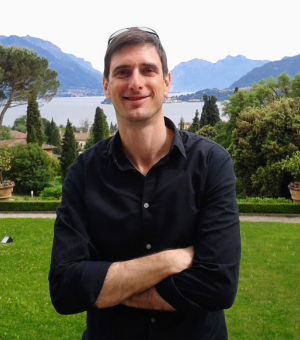
Professor of Intellectual History and Enlightenment Studies
Magdalen College
The intellectual and cultural history of Europe in the long 18th century (ca. 1680-1815) is my main area of research. I am particularly interested in the links between Enlightenment anthropology, theology and political theory. Other significant aspects of my research concern cross-cultural transfer, changing attitudes to paganism and polytheism, and the 20th-century reception of Enlightenment ideas.
In 2017 I joined the History Faculty and Magdalen College from UCL (University College London). I teach undergraduate and postgraduate modules, offer supervision at the master’s and doctoral levels, and co-convene the Enlightenment Workshop, Oxford’s interdisciplinary research seminar on the intellectual history and literary culture of Europe in the long 18th century. I am also involved in the activities of the Oxford Centre for Intellectual History, the Oxford Centre for European History, and the Voltaire Foundation.
I have held research fellowships at the Wissenschaftskolleg zu Berlin, the Clark Library at UCLA, CRASSH at Cambridge, the Freie Universität in Berlin, the University of Göttingen, and the Enlightenment Research Centre at the University of Halle (IZEA). Other awards include grants from the Leverhulme Trust and the Thyssen Stiftung, as well as the 2020 James L. Clifford Prize of the American Society for 18th-Century Studies.
Recent publication include a book on Frederick the Great as a philosopher (Princeton, 2027) and the first modern English edition of a wide range of writings by the Prussian monarch (Princeton, 2021). Edited/co-edited books include items on 18th-century prize competitions, collaboration between Jewish and Christian Intellectuals in Berlin around 1800, Lessing’s Laocoon, different aspects of Jean-Jacques Rousseau’s work and its impact, and 18th-century Epicureanism.
Publications
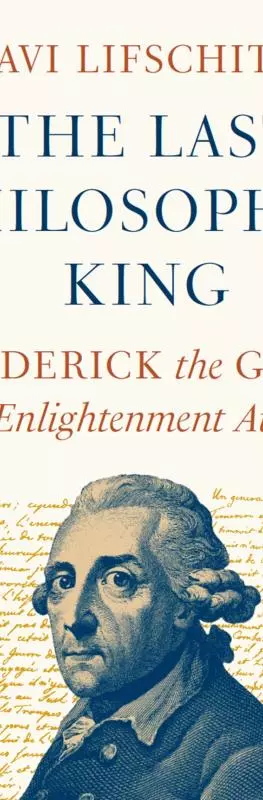
The Last Philosopher King: Frederick the Great as Enlightenment Author
Avi S. Lifschitz
The life of a working author would seem to be beneath the dignity of a hereditary monarch. Yet Frederick the Great, King of Prussia from 1740 to 1786, was a prolific and public author whose writings in different genres on many topics were an integral part of his image. In The Last Philosopher King, Avi Lifschitz examines Frederick’s extensive writings and authorial persona. Often seeking to influence public opinion with his literary work, Frederick also experienced the disagreeable aspects of authorship: unflattering reviews, refutations, personal attacks and pirated editions. Lifschitz describes how this public scrutiny of Frederick’s writings transformed the king’s authorial agency into a form of royal accountability: his subjects (and foreign authors) occasionally criticized his policies by reference to the principles avowed in his writings. Frederick’s activity in the public sphere of print allowed him to create an image of responsive and engaged government even as he ruled as an absolute monarch.
DPhil Students
I would be glad to hear from prospective DPhil and MSt/MPhil students interested in the European Enlightenment, cross-cultural transfer, and other topics concerning 18th-century Europe (especially Germany and France). I usually supervise students enrolled on the MSt/MPhil strands in Intellectual History and in British and European History 1700-1850.
In the Media
- 5 April 2021 - ‘Enlightenment Studies at Oxford: Intellectual History Across the Disciplines’- Centre for Intellectual History Blog