Professor Sarah Mortimer
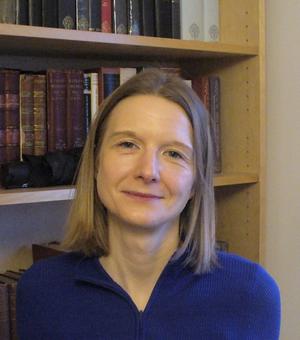
Professor of Early Modern History
Christ Church
Research Interests
Currently I am studying the ideas of the seventeenth-century Dutch Remonstrants, one of the most fascinating yet neglected Christian communities. They were strongly committed to moral responsibility and accountability, and this led them into conflict with a Calvinist Church which insisted on the doctrine of predestination. In defending their position, the Remonstrants appealed to concepts of natural law, justice, and liberty, while maintaining that no human creed or confession could bind the conscience. They became some of the leading advocates for toleration in the period and their writing contributed in important ways to early modern debates about natural law, Christian ethics, and the nature of both church and state. Among their allies was the lawyer Hugo Grotius, and when John Locke wrote his famous ‘Epistola de Tolerantia’, the addressee of this letter was a Remonstrant, Philip van Limborch.
This project forms part of my wider interest in political and religious ideas during and after the Reformation. My most recent book, entitled Reformation, Resistance, and Reason of State (Oxford, 2021), covers a crucial period in the development of political thought. I show that during a time of expanding empires, religious upheaval, and social change, new ideas about the organisation and purpose of human communities came to be articulated. In particular, there was a growing focus, in the wake of the Reformation, on civil or political authority as distinct from the church or religious authority. My book draws on a wide range of sources from Europe and beyond; in it I make connections between Christian Europe and the Muslim societies that lay to its south and east. Writing it encouraged me to think across geographical and religious boundaries and I emphasise the extent to which concerns about the legitimacy of political power were shared by people of different faiths.
Developing some themes from the book, I have also become interested how religious practice has been seen as essential for community formation, a subject of growing interest today but on which there was sustained and explicit reflection in the early modern period. I have discussed these themes in recent articles on Catholic views of the role of sacrifice in the creation and maintenance of human societies and on the piety, public and private, of the Antitrinitarians. I have enjoyed developing some of this work as part of projects involving scholars of law, theology, political theory and literature and greatly value history's strong inter-disciplinary connections.
Publications
Reformation, Resistance, and Reason of State (1517-1625)
The period 1517-1625 was crucial for the development of political thought. During this time of expanding empires, religious upheaval, and social change, new ideas about the organisation and purpose of human communities began to be debated. In particular, there was a concern to understand the political or civil community as bounded, limited in geographical terms and with its own particular structures, characteristics and history. There was also a growing focus, in the wake of the Reformation, on civil or political authority as distinct from the church or religious authority.