Professor J P Park
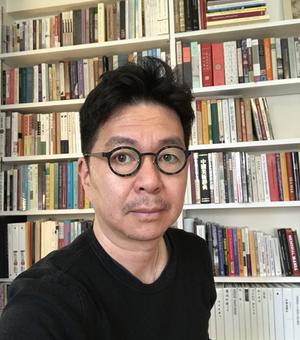
June and Simon Li Professor in the History of Art and Fellow of Lincoln College
Department of History of Art | Lincoln College
My primary research focuses on early modern Chinese and Korean art, with broader interests in print culture, cartography, literary criticism, art forgery, and post-globalism in contemporary East Asian art. My publications include several single-authored books, an exhibition catalogue, an edited volume, and dozens of articles in leading journals, including The Art Bulletin, Archives of Asian Art, Artibus Asiae, Third Text, and Orientations.
Research Interests
My first book, "Art by the Book: Painting Manuals and the Leisure Life in Late Ming China (1550–1644)" (University of Washington Press, 2012), examines the unprecedented popularity of painting manuals in early modern China. As cultural standing increasingly depended on mastery of literati taste and knowledge, these publications offered a growing reading public access to artistic techniques, connoisseurship, and sensibilities associated with elite status. The book explores the intersection of painting, social positioning, and cultural authority, addressing a question that continues to inform my research: Why did artistic talent become so important in early modern China? Widely reviewed, Art by the Book was a finalist for the Charles Rufus Morey Book Award in 2014.
My second book, "A New Middle Kingdom: Painting and Cultural Politics in Late Chosŏn Korea (1700–1850)" (University of Washington Press, 2018), challenges conventional accounts of late Chosŏn art as an expression of economic prosperity and cultural renaissance. Instead, it examines how true-view landscape and genre painting participated in the cultural politics of social hierarchy and ruling-class authority. The book also reassesses Korea’s engagement with Chinese art books and Edo Japanese artistic practices, challenging nationalist assumptions that have shaped the study of Chosŏn art. This interdisciplinary study received the Charles Rufus Morey Book Award in 2020.
My third book, "The Forger’s Creed: Reinventing Art History in Early Modern China" (University of California Press, 2025), investigates the boundaries between historical truth and fabrication through Zhang Taijie’s 1634 A Record of Treasured Paintings (Baohuilu), an elaborate forged account of a painting collection. I examine how such fabrications were constructed, circulated, and ultimately incorporated into the historical record, asking how forgery itself has shaped the writing of Chinese art history.
My scholarship also extends to contemporary art and collaborative projects. In 2012, I curated "Keeping It Real: Korean Artists in the Age of Multi-Media Representation" and authored its accompanying catalogue, questioning established notions of “Korean” and “global” art. I also co-edited "A Companion to Korean Art" (Wiley Blackwell, 2020) with Juhyung Rhi and Burglind Jungmann, the first comprehensive volume devoted to the history of Korean art.
My current book project, "Pastmodern: The Traditions of the Avant-Garde in Early East Asian Art" (under contract with Penn State University Press), examines China, Korea, and Japan to reconsider the assumed Western origins of artistic modernity and the avant-garde. By recovering East Asian practices that anticipated strategies celebrated in modern and postmodern art by centuries, the project proposes “pastmodern” as a framework for rethinking conventional divisions between tradition and modernity and for developing a more inclusive account of global art history.
Publications
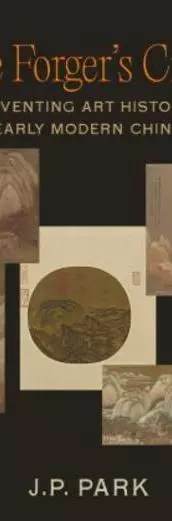
The Forger's Creed Reinventing Art History in Early Modern China
In 1634, scholar-official Zhang Taijie (b. ca. 1588) published a book titled A Record of Treasured Paintings (C. Baohui lu), presenting an extensive catalogue of a purportedly vast painting collection he claimed to have built. However, the entire book is Zhang's meticulously crafted forgery; he even forged paintings to match the documentation, and profited from trading them. Furthermore, the book intriguingly mirrors unfounded art-historical claims of its time. Prominent figures like Dong Qichang (1555–1636) made entirely fabricated arguments to assert legitimate lineages in Chinese art, designed to create a fictionalized history shaped by preferred beliefs rather than reality.