
Professor Andrew Hopper
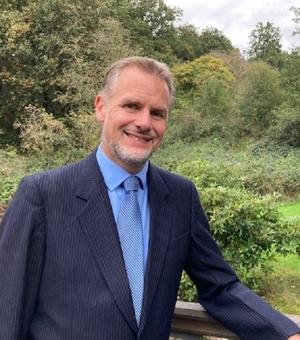
Professor in Local and Social History
Kellogg College
I am a historian of religion, politics and society in early modern England with research expertise on the British and Irish Civil Wars. I graduated from University of York in 1999 with a doctoral thesis examining the nature of parliamentarian allegiance in civil-war Yorkshire. Thereafter I was a researcher for the JISC-funded Virtual Norfolk Project at the University of East Anglia (2000-2003) and the AHRC-funded High Court of Chivalry Project at the University of Birmingham (2003-2006). I was appointed Lecturer in the Centre for English Local History at the University of Leicester in 2006, where I was promoted to Professor (2018) and Director of the Centre (2020). I moved to the Department for Continuing Education in September 2021.
Research Interests
I have a passion for teaching early modern and local history, as well as public engagement and collaborative projects with schools and museums. I am keen to supervise postgraduate research into early modern British history. I am best known for my two monographs 'Black Tom': Sir Thomas Fairfax and the English Revolution (Manchester University Press, 2007) and Turncoats and Renegadoes: Changing Sides in the English Civil Wars (Oxford University Press, 2012). I am currently working on my third monograph Widowhood and Bereavement in the English Civil Wars under contract with Oxford University Press, which is based on the AHRC-funded Civil War Petitions Project (2017-2022) for which I am Principal Investigator. I am also chair of the editorial board of Midland History, a patron of the Naseby Battlefield Project, and Academic Director of the National Civil War Centre, where I was co-curator of the Battle-Scarred exhibition.
Publications
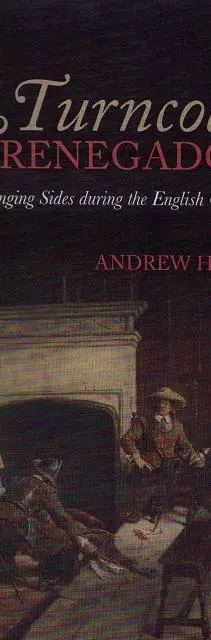
Turncoats and Renegadoes: Changing Sides in the English Civil Wars
This book examines the practice of changing sides during the English civil wars. It examines the extent and significance of side-changing in England and Wales, but also includes comparative material from Scotland and Ireland. The first half identifies side-changers among peers, MPs, army officers, and common soldiers, before reconstructing the chronological and regional patterns to their defections.