Dr Roy Bar Sadeh
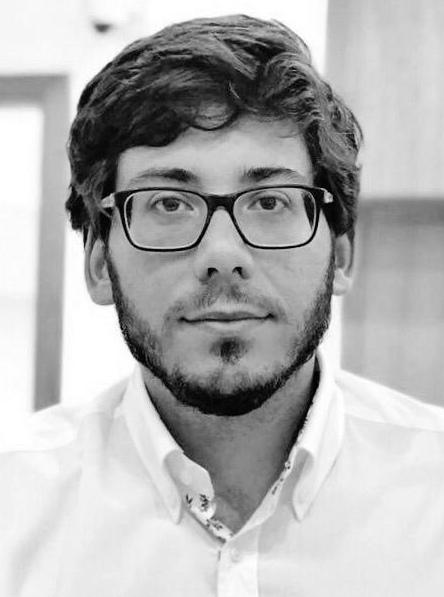
Associate Professor of Modern South Asian History and Non-Tutorial Fellow
St Antony's College
My research focuses on the nineteenth- and twentieth-century intellectual, social, and political history of South Asia and its place within global debates about sovereignty, belonging, the governance of difference, and the protection of vulnerable populations. Tracing how subcontinental actors, Muslim thinkers in particular, engaged with ideas, movements, and institutions across the Russian and Ottoman empires and their successor states, my work recovers South Asia's constitutive role in shaping modern international politics. Before joining Oxford, I was a Lecturer at the University of Manchester, a Postdoctoral Fellow at the Graduate School for Global Intellectual History, Freie Universität Berlin, and a Postdoctoral Research Associate at Yale Law School's Abdullah S. Kamel Center for the Study of Islamic Law and Civilization. My PhD dissertation (Columbia University, 2022) was awarded the Ab Imperio Prize.
Research Interests
- Religious and social difference in trans-imperial and international frames
- Global intellectual history of key political ideas of the modern era
- Alternative projects of sovereignty, statehood, minority rights, and protection in South Asia and its adjacent regions
- Indo-Arab intellectual and political exchanges
- South Asian engagements with Soviet models of nationhood and the governance of difference
- Muslim thought and internationalism
My current research revolves around four interconnected trajectories. The first is the global history of "minority" as a political and social category in South Asia. My first book, Muslims and the Minority Question: A Global History of South Asia, 1858-1947 (University of Chicago Press, forthcoming 2027), argues that North Indian Muslim intellectuals, rather than rejecting the category, turned it into a critical vocabulary of social justice and emancipation. Bringing together diverse Urdu thought worlds of North India with state-building projects and political movements across the Russian and Ottoman empires and their successor states, it shows how these thinkers drew creatively on Islamic thought, Ottoman citizenship debates, Arab reform movements, and Soviet federalism. In doing so, they offered powerful alternative interpretations of one of the key political ideas of the modern era. Related articles have appeared in the Journal of the Economic and Social History of the Orient (2025) and Comparative Studies in Society and History (2024).
The second concerns South Asian engagements with Soviet models of governing difference. My new book project, Sovietizing Difference: Visions of Statehood in South Asia's Short Twentieth Century, examines how Muslim scholars, constitutional lawyers, officials, and communist organisers adapted and contested these models, producing distinctly South Asian visions of federalism and pluralism.
The third, which I intend to develop further in the coming years, is the global history of protecting vulnerable populations. My Past & Present article (2026) on international Muslim debates about protecting Muslims in the interwar USSR uses protection as a lens on the history of international law and politics.
The fourth is my ongoing interest in Indo-Arab connections as a way of rethinking histories of Islamic thought, Muslim internationalism, and religious and social difference across the geographies of what today is broadly conceived as South Asia and the Middle East. With Julien Columeau, I am translating the Urdu and Arabic writings of Abdur Razzaq Malihabadi, part of a wider effort to treat Arabic as a South Asian language; with Sajjad Rizvi, I am developing an edited volume on Indo-Arab histories. My earlier work in this area ranges from the Arabic reception of Gandhi's philosophy of the body and the role of Muslim modernists in its circulation (Comparative Studies of South Asia, Africa and the Middle East, 2018), through the Cairean periodical al-Manar and Bombay's mercantile communities (The Routledge Handbook of Global Islam and Consumer Culture, 2024), to early twentieth-century Islamic modernist printing worlds across both regions (International Journal of Islam in Asia, 2023).
Publications
DPhil Students
I welcome enquiries from prospective graduate students interested in any of my research areas. I am also happy to hear from students working more broadly on modern South Asian history, including its connections with the Middle East and Eurasia; global intellectual history; or Islamic thought in the nineteenth and twentieth centuries. In addition to primary supervision, co-supervision may also be possible for projects in related fields.
In the Media
- 5 August 2026 - Muslims and the Minority Question across the Indian Ocean - New Books Network
- 28 September 2025 - Interview on the legacy of Saudi Arabia's late Grand Mufti - BBC Radio 4, Sunday